
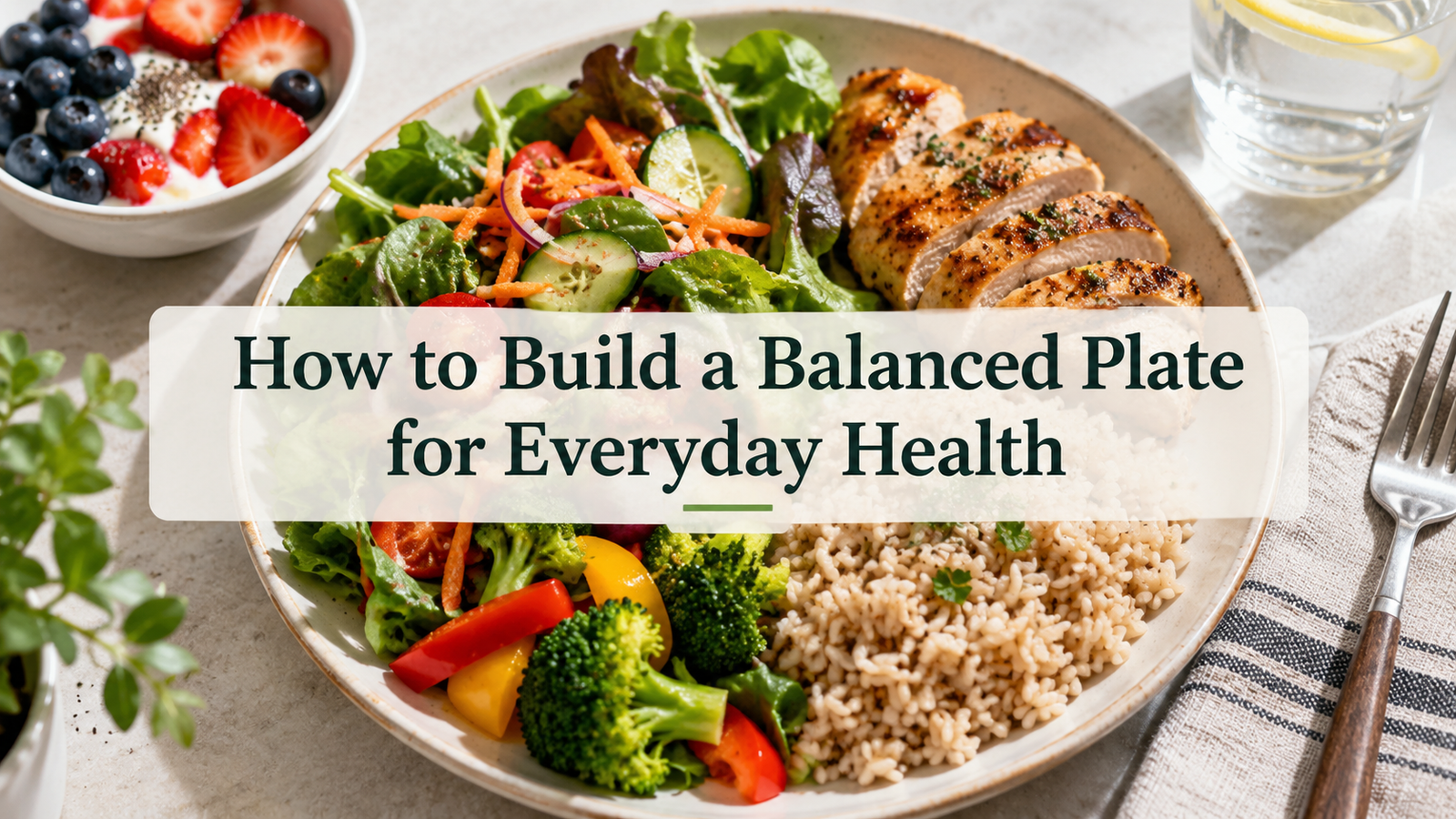
Eating well does not have to be complicated. Many people think healthy eating means following strict diets, counting every calorie, or avoiding their favorite foods completely. In reality, one of the easiest ways to improve everyday nutrition is to learn how to build a balanced plate.
A balanced plate includes a good combination of vegetables, fruits, whole grains, protein foods, and healthy fats. It gives the body the nutrients it needs for energy, growth, digestion, immunity, and overall health. Instead of focusing on one particular food, a balanced plate looks at the complete meal.
Learning how to build a balanced plate for everyday health can make meal planning easier and more practical. It can also help people develop healthier eating habits without making food feel stressful.
What Is a Balanced Plate?
A balanced plate is a simple way of organizing food so that each meal contains different types of nutrients. The idea is to include enough vegetables, a good source of protein, a healthy carbohydrate, and a small amount of healthy fat.
A simple plate can be divided into three main parts.
About half of the plate can contain vegetables and fruits.
About one quarter can contain protein rich foods.
About one quarter can contain whole grains or other healthy carbohydrate foods.
A small amount of healthy fat can also be added through foods such as nuts, seeds, olive oil, avocado, or fish.
This method is useful because it focuses on balance rather than restriction.
Why a Balanced Plate Matters
The human body needs many different nutrients every day. No single food can provide everything the body requires.
Carbohydrates provide energy. Protein supports muscles and body tissues. Healthy fats support the brain and help the body absorb certain vitamins. Vegetables and fruits provide vitamins, minerals, fiber, and natural plant compounds.
When meals regularly contain a variety of these foods, the body has a better chance of receiving balanced nutrition.
A balanced plate can also make meals more satisfying. Meals that contain protein, fiber, and healthy fats usually keep a person feeling full for longer than meals made mostly from refined carbohydrates.
Fill Half the Plate With Vegetables and Fruits
Vegetables and fruits should form a large part of a healthy meal because they are naturally rich in vitamins, minerals, fiber, and antioxidants.
Vegetables can include spinach, carrots, tomatoes, cucumber, cabbage, cauliflower, peas, beans, broccoli, capsicum, pumpkin, okra, and many other options.
Try to include different colors whenever possible.
Green vegetables may provide folate, vitamin K, and other useful nutrients. Orange and yellow vegetables often contain carotenoids. Tomatoes contain natural plant compounds such as lycopene.
Eating different colors is a simple way to increase variety.
Fruit can also be included with meals or eaten as a snack. Apples, bananas, oranges, guava, melon, papaya, berries, grapes, and seasonal fruits can all be part of a balanced eating pattern.
Whole fruits are usually a better everyday option than fruit juice because whole fruit contains more fiber.
Choose a Good Source of Protein
Protein is an important part of a balanced plate. The body uses protein to build and repair tissues. Protein also plays a role in enzymes, hormones, muscles, skin, and many other body functions.
Healthy protein sources include eggs, chicken, fish, lentils, beans, chickpeas, yogurt, milk, tofu, nuts, and seeds.
Meat can also be included as part of a balanced diet. Choosing reasonable portions and using cooking methods such as grilling, baking, boiling, steaming, or light cooking can help keep meals balanced.
Plant based protein foods are especially useful because many of them also provide fiber.
For example, lentils and chickpeas provide protein while also supporting digestion because of their fiber content.
Add Healthy Carbohydrates
Carbohydrates are one of the body’s main sources of energy. The type of carbohydrate matters.
Whole grains and minimally processed carbohydrate foods usually provide more fiber and nutrients than highly refined foods.
Examples include whole wheat roti, brown rice, oats, barley, whole grain bread, corn, potatoes, sweet potatoes, and other whole grain foods.
Refined carbohydrates such as sugary cereals, pastries, biscuits, white bread, and heavily sweetened foods can still be eaten occasionally, but they should not form the main part of everyday meals.
A balanced plate normally gives carbohydrates about one quarter of the plate rather than allowing them to take up most of the meal.
Include Healthy Fats in Small Amounts
Fat is an essential nutrient, but portion size is important because fat is energy dense.
Healthy fat sources include nuts, seeds, olive oil, avocado, peanuts, almonds, walnuts, and oily fish.
These foods contain unsaturated fats that can be included as part of a healthy eating pattern.
For example, a small handful of nuts can be added to a snack. Seeds can be mixed into yogurt or oatmeal. A small amount of oil can be used when cooking vegetables.
The goal is not to remove fat completely. The goal is to choose better sources and use appropriate amounts.
Remember the Importance of Fiber
Fiber is one of the most important parts of a balanced diet. It is found mainly in vegetables, fruits, whole grains, beans, lentils, nuts, and seeds.
Fiber supports normal digestion and can help meals feel more filling.
A plate that contains vegetables, whole grains, and beans naturally becomes much richer in fiber.
Increasing fiber gradually is often more comfortable than suddenly eating very large amounts. Drinking enough water is also important when eating more fiber rich foods.
Make Water Your Main Drink
A healthy plate works best when it is combined with healthy drink choices.
Water is one of the simplest choices for everyday hydration. It does not contain added sugar or unnecessary calories.
People who do not enjoy plain water can add lemon slices, mint, cucumber, or other fresh ingredients for flavor.
Tea, milk, and other drinks can also fit into a balanced diet depending on how they are prepared.
Sweetened soft drinks and heavily sweetened beverages are better treated as occasional drinks rather than everyday sources of hydration.
Pay Attention to Portion Sizes
Even healthy foods can be eaten in amounts that are larger than the body needs.
The balanced plate method naturally helps with portion control because different foods are given different amounts of space.
Vegetables take up the largest section. Protein and carbohydrates take smaller sections.
However, individual needs can be different.
A very active person may need more food than someone who spends most of the day sitting. Children, teenagers, older adults, athletes, and people with specific health conditions may also have different nutritional needs.
The plate method should therefore be used as a flexible guide rather than a strict rule.
Build Breakfast With Balance
Breakfast can also follow the same basic idea.
A balanced breakfast might include oatmeal with milk, fruit, and nuts.
Another option could be eggs with whole wheat toast and sliced vegetables.
Yogurt with fruit, oats, and seeds can also create a balanced combination of protein, carbohydrates, fiber, and healthy fat.
Breakfast does not need to be large for everyone. The important point is to choose foods that provide useful nutrients instead of relying only on sugary foods.
Build a Balanced Lunch
Lunch can be simple and still provide good nutrition.
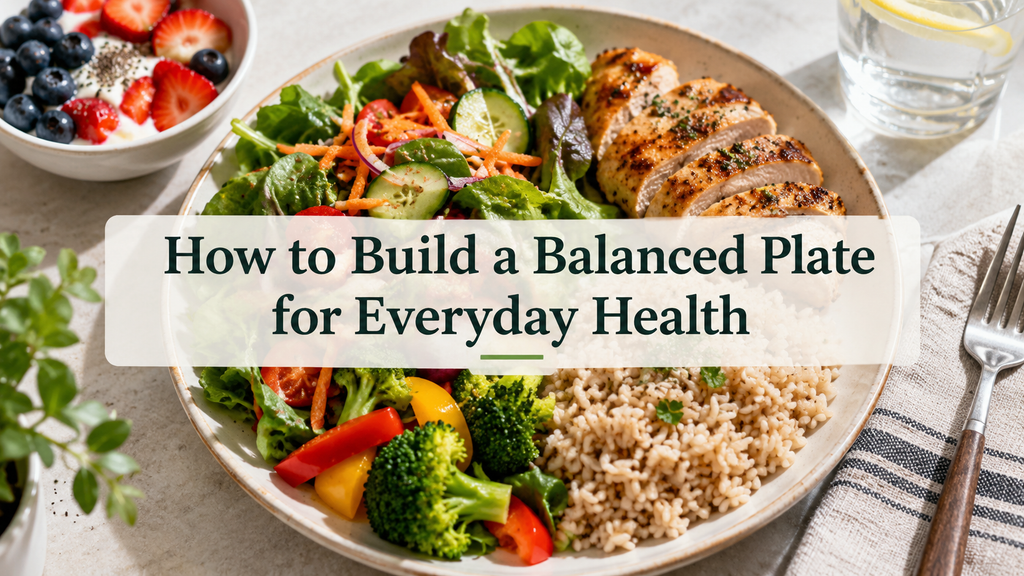
For example, half the plate can contain salad or cooked vegetables. One quarter can contain chicken, fish, lentils, or beans. The remaining quarter can contain brown rice or whole wheat roti.
A small bowl of yogurt can also be added.
This kind of meal provides several food groups in one plate without requiring complicated recipes.
Create a Healthy Dinner Plate
Dinner can follow the same basic structure.
A person could have grilled fish with cooked vegetables and a small serving of rice.
Another meal could include chicken curry with salad and whole wheat roti.
A vegetarian dinner might include lentils, mixed vegetables, yogurt, and a small portion of rice.
The specific foods can change according to culture, budget, season, and personal preference.
The balance between the foods is more important than following one fixed menu.
Use Simple Cooking Methods
The way food is prepared can affect the overall nutritional quality of a meal.
Grilling, steaming, roasting, baking, boiling, and light sautéing are useful cooking methods.
Deep frying can be enjoyed occasionally, but using it for most meals can add large amounts of oil.
Cooking vegetables for a reasonable amount of time also helps preserve their texture and nutritional value.
Herbs and spices can add flavor without requiring large amounts of salt or heavy sauces.
Keep Healthy Foods Convenient
Many people understand healthy eating but struggle with convenience.
Preparing a few ingredients in advance can make balanced meals much easier.
Vegetables can be washed and stored. Boiled eggs can be prepared for quick meals. Lentils and beans can be cooked in larger batches. Fruit can be kept where it is easy to see and reach.
When healthier foods are convenient, people are more likely to choose them.
Do Not Aim for Perfection
A balanced plate does not mean every single meal must look perfect.
Nutrition should be considered over time.
If one meal contains fewer vegetables, the next meal can include more. If a person enjoys a dessert or fried food occasionally, it does not automatically make the overall diet unhealthy.
Healthy eating works best when it is flexible enough to continue for years.
Very strict food rules are often difficult to maintain. A realistic eating pattern allows room for enjoyment while keeping nutritious foods at the center of most meals.
Listen to Hunger and Fullness
Building a balanced plate is useful, but it is also important to pay attention to the body’s signals.
Eating slowly can make it easier to notice when hunger is decreasing.
People may sometimes continue eating simply because food is available or because they are distracted by television or mobile phones.
Eating with more attention can help a person understand comfortable portion sizes.
Hunger levels may also change from one day to another depending on activity, sleep, stress, and other factors.
Use Seasonal and Local Foods
Healthy eating does not need to depend on expensive imported foods.
Seasonal vegetables, fruits, grains, lentils, eggs, and locally available protein foods can all be used to build a balanced plate.
Seasonal foods are often fresher and may also be more affordable.
A simple meal made with lentils, vegetables, roti, yogurt, and fruit can provide valuable nutrition without requiring costly ingredients.
This makes balanced eating practical for everyday life.
Plan Meals Around Variety
Eating the same foods every day may provide some nutrients but can limit dietary variety.
Try changing vegetables, protein foods, grains, and fruits during the week.
For example, chicken can be used one day, lentils another day, fish on another day, and beans on another.
Rice can sometimes be replaced with whole wheat roti, oats, potatoes, or another grain.
Variety makes meals more interesting and also helps provide a wider range of nutrients.
A Simple Example of a Balanced Plate
Imagine a normal dinner plate.
Half of it contains mixed vegetables and salad.
One quarter contains grilled chicken or lentils.
One quarter contains brown rice or whole wheat roti.
A small serving of yogurt is placed on the side.
Water is served as the main drink.
Fruit can be eaten afterward if desired.
This simple meal provides protein, carbohydrates, fiber, vitamins, minerals, and other useful nutrients.
That is the main idea behind building a balanced plate.
Common Mistakes When Building a Healthy Plate
One common mistake is filling most of the plate with rice, bread, pasta, or another carbohydrate while adding very few vegetables.
Another mistake is thinking that protein must always come from meat. Beans, lentils, dairy foods, eggs, nuts, and seeds can also provide protein.
Some people also avoid all fat because they believe it is unhealthy. Healthy fats are still important when eaten in suitable portions.
Drinking large amounts of sugary beverages with an otherwise healthy meal can also increase added sugar intake.
The best approach is to look at the entire meal rather than focusing on only one ingredient.
Make the Balanced Plate a Daily Habit
Healthy eating becomes easier when it turns into a normal routine.
Before preparing a meal, simply ask a few questions.
Where are the vegetables?
What is the protein source?
What carbohydrate am I choosing?
Is there a healthy fat?
What am I drinking?
These questions can help create balanced meals without complicated calculations.
Over time, choosing balanced portions can become automatic.
Final Thoughts
Learning how to build a balanced plate for everyday health is one of the simplest ways to improve daily nutrition. It does not require expensive foods, complicated meal plans, or strict dieting.
A healthy plate focuses on variety, balance, and sensible portions.
Fill a large part of the plate with vegetables and fruits. Add a good source of protein. Include a reasonable portion of whole grains or another nutritious carbohydrate. Use healthy fats in small amounts and make water the main drink.
Most importantly, keep the approach realistic.
Healthy eating is not about creating a perfect plate every time. It is about making balanced choices regularly and building habits that can support health for the long term.
When nutritious foods become a normal part of everyday meals, eating well becomes simpler, more enjoyable, and easier to maintain.