
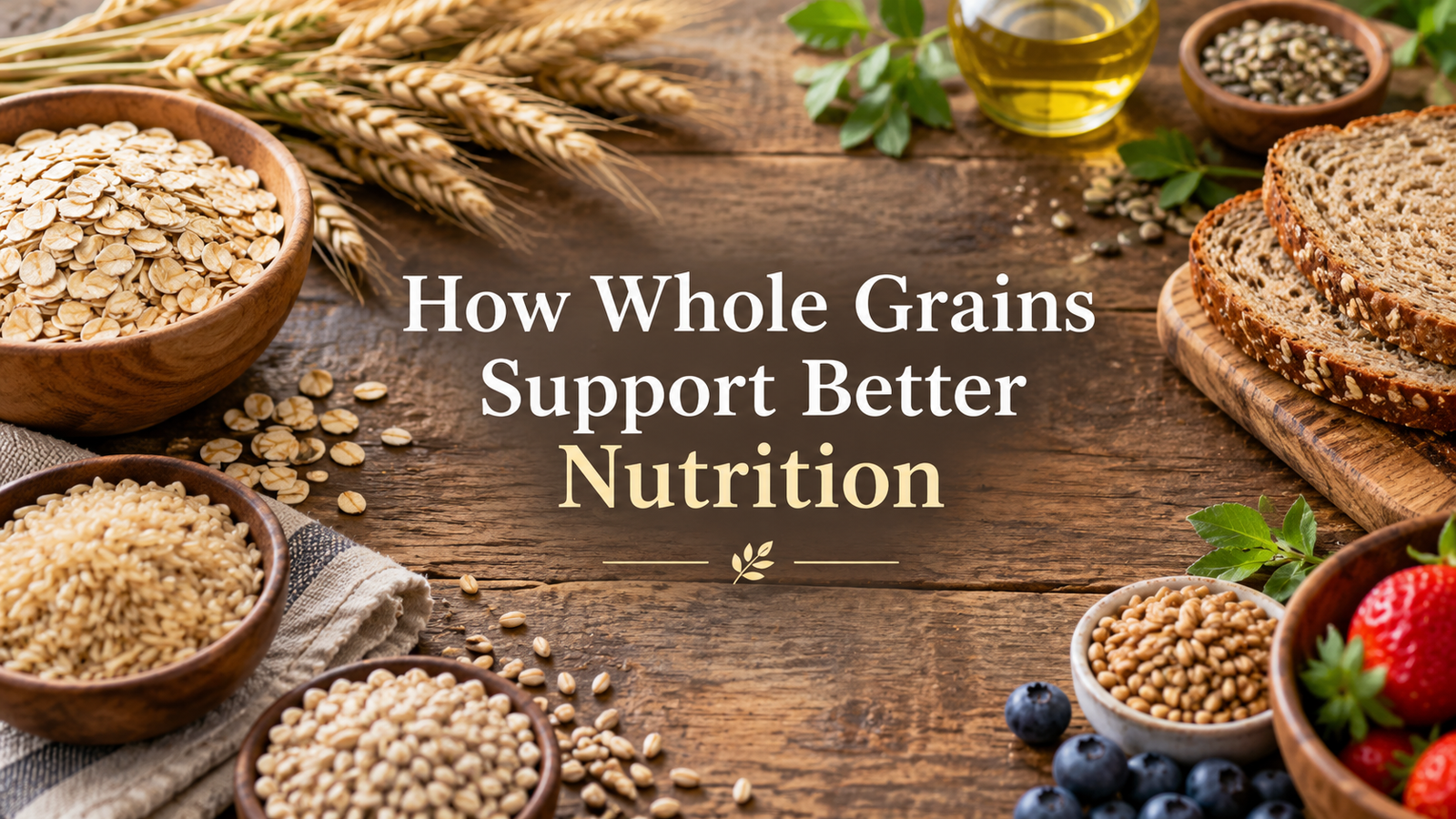
Whole grains are an important part of a healthy and balanced diet. They provide the body with essential nutrients that support energy, digestion, heart health, and overall wellness. Many people eat grain foods every day, but not all grains offer the same nutritional value. Refined grains are processed in a way that removes important parts of the grain, while whole grains keep the natural structure almost completely intact.
Learning how whole grains support better nutrition can make everyday food choices easier. Foods such as oats, brown rice, whole wheat, barley, millet, and whole grain bread can add valuable nutrients to meals without making a diet complicated. When eaten as part of a varied diet, whole grains can support many important functions in the human body.
What Are Whole Grains?
A grain kernel naturally contains three main parts. These are the bran, germ, and endosperm.
The bran is the outer layer of the grain. It contains fiber, minerals, and several plant compounds.
The germ is the part that can develop into a new plant. It contains vitamins, healthy fats, minerals, and antioxidants.
The endosperm is the largest part of the grain. It mainly contains carbohydrates along with some protein and smaller amounts of vitamins and minerals.
Whole grains contain all three of these parts. Refined grains, on the other hand, usually have the bran and germ removed during processing. This gives refined grains a softer texture and sometimes a longer shelf life, but it also reduces their natural fiber and nutrient content.
This is one of the main reasons whole grains are generally considered more nutritious than heavily refined grain products.
Whole Grains Are a Good Source of Fiber
One of the greatest nutritional benefits of whole grains is their fiber content.
Dietary fiber is a type of carbohydrate that the body does not fully digest. Instead of being broken down like sugar or starch, much of the fiber passes through the digestive system.
Fiber helps support regular bowel movements by adding bulk to stool. It can also help food move more comfortably through the digestive tract.
Whole grain foods such as oats, brown rice, whole wheat bread, barley, and bran cereals can provide useful amounts of fiber.
Eating enough fiber may also help people feel satisfied after meals. Foods that contain fiber often take longer to chew and digest. This can help reduce the desire to snack soon after eating.
A diet containing enough fiber is also associated with better digestive health and may support a healthier balance of bacteria in the gut.
Whole Grains Provide Important Vitamins
Whole grains naturally contain several B vitamins that help the body use food for energy.
These vitamins include thiamine, riboflavin, niacin, and folate.
B vitamins are involved in many important processes in the body. They help the body convert carbohydrates, fats, and proteins into forms of energy that cells can use.
They also support the normal function of the nervous system.
Although some refined grain products are enriched with certain vitamins after processing, whole grains naturally contain a wider combination of nutrients.
Choosing a variety of whole grain foods can therefore contribute to a more balanced daily intake of vitamins.
Whole Grains Contain Valuable Minerals
Whole grains also provide several minerals that are important for good nutrition.
These may include magnesium, iron, zinc, phosphorus, selenium, and manganese.
Magnesium plays a role in muscle function, nerve function, and many chemical reactions in the body.
Iron is important for producing hemoglobin, which helps carry oxygen in the blood.
Zinc supports normal immune function and is involved in tissue growth and repair.
Selenium acts as part of the body’s antioxidant defense system.
The exact mineral content varies between different grains, which is why eating several types of whole grains can be helpful.
For example, oats, barley, brown rice, whole wheat, and millet each provide a slightly different nutritional profile.
Whole Grains Support Steady Energy
Carbohydrates are the body’s main source of energy, and grains provide carbohydrates in useful amounts.
The difference is that whole grains usually contain more fiber and nutrients than refined grains.
Because of their fiber content, whole grain foods are often digested more slowly than highly refined grain products. This can help provide a more gradual release of energy.
For example, a breakfast made with oats may keep a person feeling satisfied longer than a breakfast made mainly from highly refined sugary foods.
Similarly, brown rice or whole wheat chapati can provide carbohydrates while also adding fiber, vitamins, and minerals to the meal.
This combination makes whole grains useful for people who want meals that provide both energy and nutrition.
Whole Grains Can Support Heart Health
Whole grains are often included in eating patterns that promote heart health.
The fiber found in whole grains can play an important role. Certain types of soluble fiber can help reduce the absorption of cholesterol in the digestive system.
Oats and barley are especially known for containing a type of soluble fiber called beta glucan.
A balanced diet that regularly includes whole grains, vegetables, fruits, legumes, nuts, and healthy protein sources may help support healthy cholesterol levels and overall cardiovascular health.
Whole grains also provide magnesium and antioxidant compounds that contribute to normal body functions.
Of course, no single food can protect the heart by itself. Heart health depends on the overall diet, physical activity, sleep, smoking habits, body weight, and other lifestyle factors.
Still, replacing some refined grains with whole grains can be a practical nutritional improvement.
Whole Grains May Help With Healthy Weight Management
Whole grains can also be helpful in a balanced eating pattern for maintaining a healthy body weight.
Fiber rich foods generally provide more fullness than low fiber processed foods.
When a person feels satisfied after eating, it may become easier to control portion sizes and reduce unnecessary snacking.
For example, a bowl of oatmeal topped with fruit may provide more lasting fullness than a sweet pastry made from refined flour.
Whole grain foods should still be eaten in reasonable portions because they contain calories like other carbohydrate foods.
The benefit comes from choosing nutrient rich foods that help support fullness and provide useful vitamins, minerals, and fiber at the same time.
Whole Grains Support Digestive Health
A healthy digestive system depends partly on the types of foods we eat.
Whole grains can contribute to digestive health because their fiber helps maintain normal bowel function.
Some fibers found in whole grains can also act as food for beneficial bacteria living in the large intestine.
These bacteria are part of the gut microbiome, a community of microorganisms that plays an important role in digestion and general health.
When beneficial gut bacteria receive enough fiber, they can produce compounds that may support the health of the cells lining the colon.
This is another reason why fiber containing foods such as whole grains, fruits, vegetables, and legumes are commonly recommended as part of a balanced diet.
Whole Grains Offer Natural Plant Compounds
Whole grains contain more than just carbohydrates, fiber, vitamins, and minerals.
They also provide natural plant compounds, including phenolic acids, lignans, and other antioxidants.
Antioxidants help protect cells from damage caused by unstable molecules known as free radicals.
The bran and germ contain many of these beneficial compounds. Since refined grain processing removes much of the bran and germ, refined grains may contain lower amounts of these natural substances.
Eating whole grains regularly can therefore add a wider variety of plant based nutrients to the diet.
Common Types of Whole Grains
There are many whole grains available, making it easy to add variety to meals.
Whole wheat is one of the most familiar options. It is commonly used in whole wheat bread, chapati, pasta, and cereals.
Oats are another nutritious choice and are commonly eaten at breakfast.
Brown rice keeps the bran and germ that are removed when white rice is produced.
Barley has a pleasant texture and can be added to soups, salads, and other dishes.
Millet is widely eaten in different parts of the world and can be cooked as porridge or used in flatbreads.
Other whole grains include quinoa, rye, buckwheat, sorghum, bulgur, and whole corn.
Trying different grains can make meals more interesting while also improving nutritional variety.
Whole Grains Versus Refined Grains
The main nutritional difference between whole grains and refined grains comes from processing.
During refining, the bran and germ are usually removed. This makes the grain softer and gives it a finer texture, but it also removes much of the natural fiber.
Several vitamins, minerals, healthy fats, and plant compounds may also be reduced.
White flour and white rice are common examples of refined grain products.
This does not mean refined grains must always be avoided. They can still be part of a balanced diet. The goal is simply to choose whole grain options more often.
For example, a person might choose brown rice for some meals, whole wheat bread instead of white bread, or oatmeal instead of a highly processed breakfast cereal.
Small changes can gradually improve the overall nutrient quality of the diet.
How to Choose Whole Grain Foods
Food labels can help identify whole grain products.
Look for words such as whole wheat, whole oats, whole rye, brown rice, or whole grain near the beginning of the ingredient list.
The color of bread is not always a reliable sign that it contains whole grains. Some breads may appear brown because of added coloring or ingredients such as molasses.
Checking the ingredient list is usually more useful.
Fiber content on the nutrition label can also provide helpful information.
Products that contain more fiber are often better choices, especially when they are also low in excessive added sugar and sodium.
Easy Ways to Eat More Whole Grains
Adding whole grains to the diet does not require major changes.
Oatmeal can be used as a simple breakfast and combined with fruit, yogurt, nuts, or seeds.
Brown rice can replace white rice in some meals.
Whole wheat flour can be used for chapati or other homemade breads.
Whole grain bread can be used for sandwiches and toast.
Barley can be added to soups and salads.
Whole grain pasta can also replace regular pasta in many recipes.
People who are not used to whole grains may prefer to introduce them gradually. The higher fiber content can sometimes cause temporary gas or bloating if fiber intake increases too quickly.
Drinking enough water is also important when increasing dietary fiber.
Whole Grains Work Best as Part of a Balanced Diet
Whole grains provide many nutritional benefits, but they are only one part of healthy eating.
A balanced diet should also include vegetables, fruits, protein sources, healthy fats, and adequate fluids.
For example, a nutritious meal might include brown rice, grilled chicken, vegetables, and yogurt.
Another meal could contain whole wheat chapati, lentils, salad, and a small serving of fruit.
Combining food groups helps provide the body with a wider range of nutrients.
Variety is especially important because no single food contains everything the body needs.
Are Whole Grains Suitable for Everyone?
Most people can include whole grains in their diet, but individual needs can vary.
People with celiac disease must avoid grains that contain gluten, including wheat, barley, and rye.
However, naturally gluten free whole grains such as brown rice, millet, buckwheat, quinoa, and certified gluten free oats may be suitable depending on individual tolerance and medical advice.
People with certain digestive conditions may also need to adjust their fiber intake.
Anyone with a specific medical condition or dietary restriction should speak with a qualified healthcare professional or registered dietitian before making major dietary changes.
Conclusion
Whole grains support better nutrition by providing fiber, vitamins, minerals, complex carbohydrates, and natural plant compounds. Unlike refined grains, they retain the bran, germ, and endosperm, allowing more of the grain’s natural nutrients to remain in the food.
Regularly eating foods such as oats, brown rice, whole wheat, barley, millet, and other whole grains can support digestion, steady energy, heart health, and overall nutrient intake.
The easiest approach is not to completely change the diet overnight. Instead, refined grain foods can gradually be replaced with whole grain options whenever practical.
A bowl of oats at breakfast, whole wheat chapati at lunch, or brown rice with dinner may seem like small choices, but these choices can contribute to a healthier eating pattern over time.
Whole grains are simple, widely available, and versatile. When combined with vegetables, fruits, protein foods, healthy fats, and an active lifestyle, they can play an important role in supporting better nutrition and long term health.