
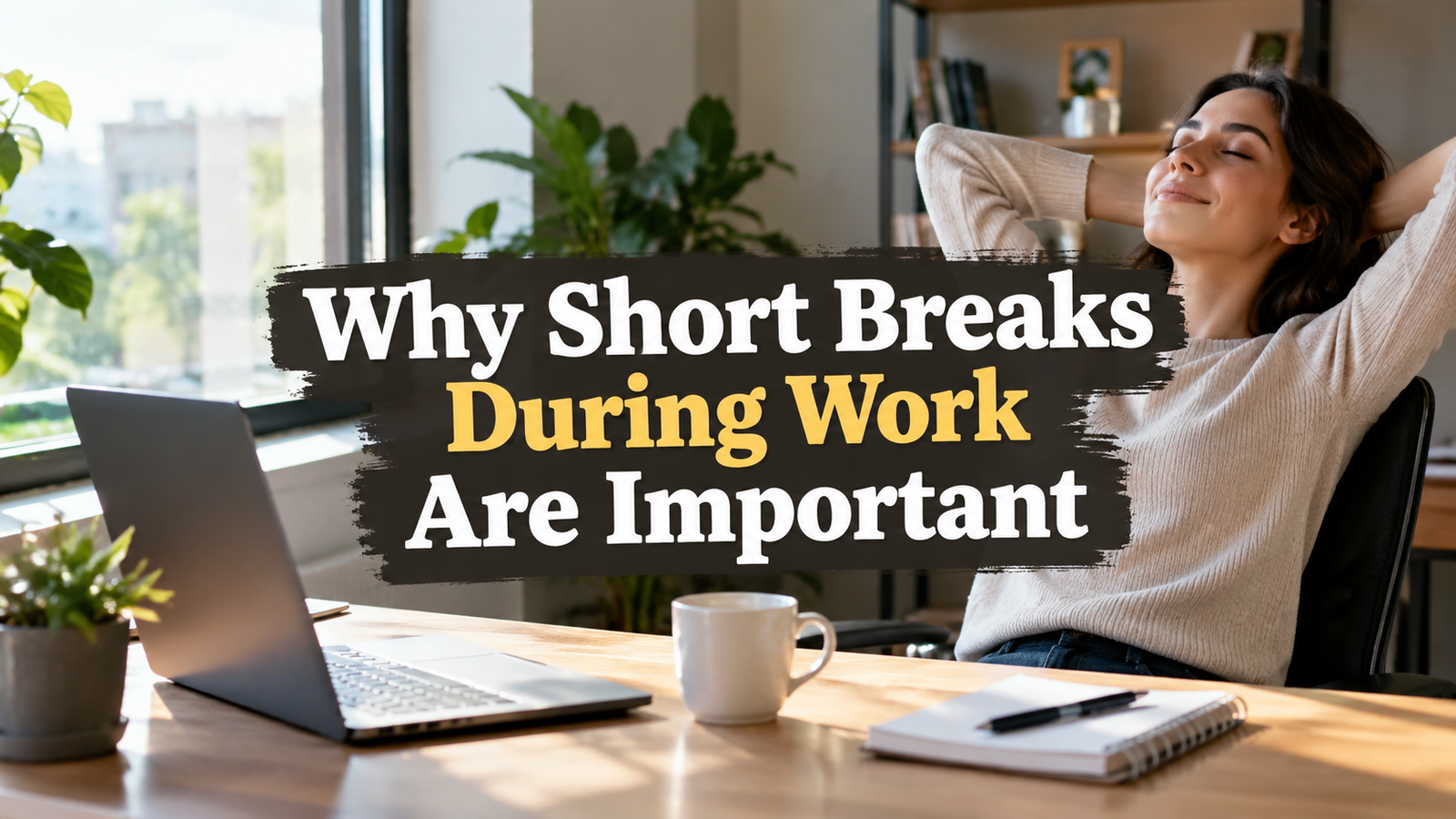
In today’s busy world, many people believe that working for long hours without stopping is the best way to become more productive. At first, this idea may sound reasonable. If a person spends more time working, it seems natural to expect more work to be completed. However, the human brain and body do not work like machines. Our concentration, energy, posture, mood, and decision making ability can decline when we work continuously for long periods.
This is why short breaks during work are important. Even a few minutes away from a task can help the mind recover, reduce physical tension, and make it easier to return to work with better focus. Short breaks are not a sign of laziness. When used properly, they can become part of a healthy and productive work routine.
I have noticed from reading about productivity, attention, and workplace wellbeing that the quality of work often matters more than simply staying busy for many hours. A person may sit at a desk for eight hours, but that does not mean every hour will be equally productive. The brain naturally becomes tired after spending too much time on the same activity.
Short Breaks Help Restore Mental Focus
One of the biggest reasons short breaks during work are important is that they help refresh concentration. When we focus on the same task for a long time, mental fatigue gradually develops. We may continue looking at the screen or reading the same document, but our attention may no longer be as sharp as it was earlier.
A short break gives the brain a chance to shift away from the task for a few moments. After returning, many people find it easier to concentrate again.
This is especially useful during work that requires reading, writing, calculation, analysis, or problem solving. These activities demand continuous mental effort. Without proper pauses, a person may start making simple mistakes because attention has become weaker.
Taking a short break can work like a mental reset. It does not need to be long. Standing up, walking around the room, stretching, drinking water, or looking away from the screen may be enough to reduce mental pressure.
Breaks Can Support Better Productivity
Some people avoid breaks because they think breaks waste valuable working time. In reality, working continuously while tired can also waste time.
When concentration declines, tasks may take longer to complete. A person may reread the same paragraph several times, make typing mistakes, forget small details, or struggle to make decisions. This creates the feeling of being busy without making meaningful progress.
Short breaks can support productivity by helping workers return to tasks with renewed attention. Instead of pushing through exhaustion, a planned pause can improve the quality of the next working period.
Productivity is not only about the number of hours spent at work. It is also about how effectively those hours are used.
A focused hour of work may produce better results than several hours of distracted effort. This is why short breaks can actually become part of an efficient working system.
Sitting for Too Long Can Make the Body Feel Uncomfortable
Modern work often involves sitting at a computer for many hours. Office employees, students, designers, writers, programmers, accountants, and remote workers may spend a large part of the day in the same position.
Remaining seated for too long can cause stiffness or discomfort in different parts of the body. The neck, shoulders, back, wrists, hips, and legs may begin to feel tired.
Short movement breaks allow the body to change position. A person can stand, stretch gently, walk for a few minutes, or simply move away from the desk.
These small movements may help reduce the discomfort that comes from staying in one posture for too long.
Changing position regularly also reminds us to pay attention to posture. Many people start the day sitting correctly but gradually lean forward toward the screen. A quick break provides an opportunity to sit properly again when returning to the desk.
Short Breaks Give the Eyes Some Rest
Screen based work has become a major part of modern life. Computers, tablets, and smartphones are used for communication, research, meetings, entertainment, and office tasks.
Looking at a screen for long periods can make the eyes feel tired or dry. People may also experience temporary difficulty focusing after staring at the same distance for too long.
Short breaks can help by allowing the eyes to look away from the screen. Looking at something farther away for a little while gives the eyes a different type of visual activity.
It can also be helpful to blink naturally and avoid staring continuously at digital screens.
A simple habit of looking away from the computer regularly can make long working sessions feel more comfortable.
Breaks May Help Reduce Workplace Stress
Work can create mental pressure. Deadlines, meetings, emails, customer demands, difficult decisions, and unfinished tasks may all contribute to stress.
When people work continuously without stopping, stress can gradually build throughout the day.
Short breaks create small spaces between stressful activities. Even five minutes of quiet time can help someone feel more settled before moving to the next task.
During a break, a person may choose to walk, breathe slowly, drink water, stretch, or sit somewhere away from the workstation.
The purpose is not to completely escape responsibilities. The goal is to reduce continuous mental pressure so that work feels more manageable.
Regular pauses can make the working day feel less overwhelming.
Movement Breaks Can Improve Energy
It is common to feel sleepy or mentally slow after sitting for a long time. This often happens in the afternoon, especially after lunch.
When energy drops, some people immediately reach for coffee or tea. While these drinks may be part of a normal routine, movement can also help a person feel more awake.
Standing up and walking for a few minutes encourages the body to become active again. Light movement may help someone return to work feeling more alert.
You do not need to perform a complete workout during office hours. Small actions can make a difference.
Walking to refill a water bottle, stretching the legs, climbing a few stairs, or walking around the building can all provide a simple change from sitting.
Short Breaks Can Support Creativity
Creativity does not always appear when we force ourselves to think harder. Sometimes ideas come when we temporarily stop concentrating on a problem.
Writers, designers, marketers, business owners, and other creative professionals may experience moments when they feel mentally stuck. Continuing to stare at the same problem may not always produce a solution.
A short break can give the brain space to process information differently.
Walking, looking outside, or doing another simple activity may allow new ideas to appear naturally.
This is one reason people sometimes think of solutions while taking a shower, walking, cooking, or doing something unrelated to work. The brain continues organizing information even when our attention has moved somewhere else.
Taking short breaks can therefore be helpful when creative thinking is required.
Breaks Can Reduce Simple Work Errors
Fatigue can increase the chance of mistakes. When people are mentally tired, they may overlook small details.
For example, an employee might enter the wrong number in a spreadsheet, forget an attachment in an email, miss an important sentence in a report, or make a typing error.
Short breaks can help maintain attention throughout the day.
After stepping away from work briefly, it may become easier to review a task with fresh eyes. Errors that were difficult to notice before the break may suddenly become obvious.
This is particularly important in jobs where accuracy matters. Taking a few minutes to reset concentration may save much more time later by preventing mistakes.
Breaks Can Improve Decision Making
Many jobs require constant decisions. Managers, business owners, healthcare workers, engineers, teachers, and office employees may need to make dozens of small decisions every day.
Decision making requires mental energy.
As the day continues, mental fatigue may make it harder to think clearly. People may become impatient or choose the easiest option rather than the best one.
Short breaks can provide time to mentally reset before making an important decision.
Instead of answering every message immediately, it may sometimes be useful to pause, think, and return with a clearer mind.
Good decisions often require calm attention rather than continuous speed.
Breaks Can Support Better Workplace Relationships
Mental tiredness does not only affect productivity. It can also affect the way people communicate.
When someone is exhausted, they may become less patient with coworkers or customers. Small problems can feel more frustrating than they normally would.
Taking short breaks may help reduce this buildup of irritation.
A worker who feels mentally refreshed may communicate more calmly and listen more carefully.
Positive workplace relationships depend on patience, respect, and clear communication. Short breaks alone cannot solve communication problems, but they can help people manage their energy throughout the day.
What Should You Do During a Short Work Break?
A useful break should feel different from the task you were doing.
For example, if you have been working on a computer, spending the entire break scrolling through social media on a phone may not provide much rest for the eyes or mind.
Instead, simple physical or relaxing activities may be more refreshing.
You could stand and stretch, walk around the office, drink water, look outside, take a few slow breaths, or briefly talk with a coworker.
Some people also enjoy stepping outside for a few minutes when possible. Fresh air and a change of environment can make the break feel more complete.
The important thing is to create a clear pause between periods of focused work.
How Long Should a Short Break Be?
There is no single perfect break schedule for everyone.
The ideal pattern depends on the type of work, personal concentration level, workplace rules, and daily responsibilities.
Some people prefer working for around 25 to 30 minutes followed by a short pause. Others may focus comfortably for 45 to 60 minutes before taking a break.
The main idea is to avoid working for extremely long periods without moving or resting.
A short break may last only a few minutes. Longer breaks can be taken during meals or between major tasks.
The best routine is one that helps you remain focused without constantly interrupting important work.
Planned Breaks Are Better Than Constant Distraction
There is an important difference between a healthy break and repeated distraction.
Checking social media every few minutes, answering unnecessary messages, or browsing random websites can interrupt concentration rather than improve it.
A planned break has a clear beginning and end.
For example, you may decide to work carefully on one task for a set period and then take a short pause.
This approach allows both concentration and recovery.
Constant interruptions make it difficult for the brain to enter deep focus. Planned breaks protect focused working time while still allowing regular mental rest.
Breaks Are Also Important for Remote Workers
Working from home may seem more comfortable than working in an office, but remote workers can also forget to take breaks.
Without coworkers, meetings, or office movement, someone may remain in the same chair for several hours.
Remote workers may also feel pressure to prove that they are productive, causing them to stay connected to work continuously.
Creating a simple break routine can help separate working periods throughout the day.
Walking around the house, stepping outside, stretching, preparing water, or briefly resting away from the computer can provide a useful reset.
Remote work should still include healthy boundaries and movement.
Listening to Your Body Is Important
People often notice signs that they need a break before they consciously decide to stop working.
Common signs may include difficulty concentrating, repeated mistakes, stiff shoulders, tired eyes, restlessness, irritability, or feeling mentally stuck.
Ignoring these signs for too long may make the rest of the working session less effective.
Learning to recognize mental and physical fatigue can help people choose better moments for breaks.
A short pause taken at the right time may prevent a much larger drop in productivity later.
Creating a Healthy Break Routine
Building regular breaks into the working day does not require a complicated system.
Start with something simple. After completing a major task or working for a reasonable period, stand up and move for a few minutes.
Keep drinking water nearby so that refilling it naturally creates movement.
Try to take lunch away from the computer when possible.
You can also use reminders if you frequently forget to move.
Over time, short breaks can become a normal part of your working routine rather than something you need to remember deliberately.
The goal is balance. Work should include periods of strong concentration followed by small opportunities for recovery.
Final Thoughts
Understanding why short breaks during work are important can change the way we think about productivity. Working without stopping may look productive from the outside, but continuous effort can gradually reduce concentration, energy, comfort, and accuracy.
Short breaks give the brain and body small opportunities to recover. They can support focus, creativity, movement, eye comfort, decision making, and overall workplace wellbeing.
A healthy working day is not about remaining busy every minute. It is about using energy wisely.
By taking short, intentional breaks, workers can return to their tasks with a clearer mind and better attention. Over time, this simple habit may help make work feel more manageable, comfortable, and productive.