
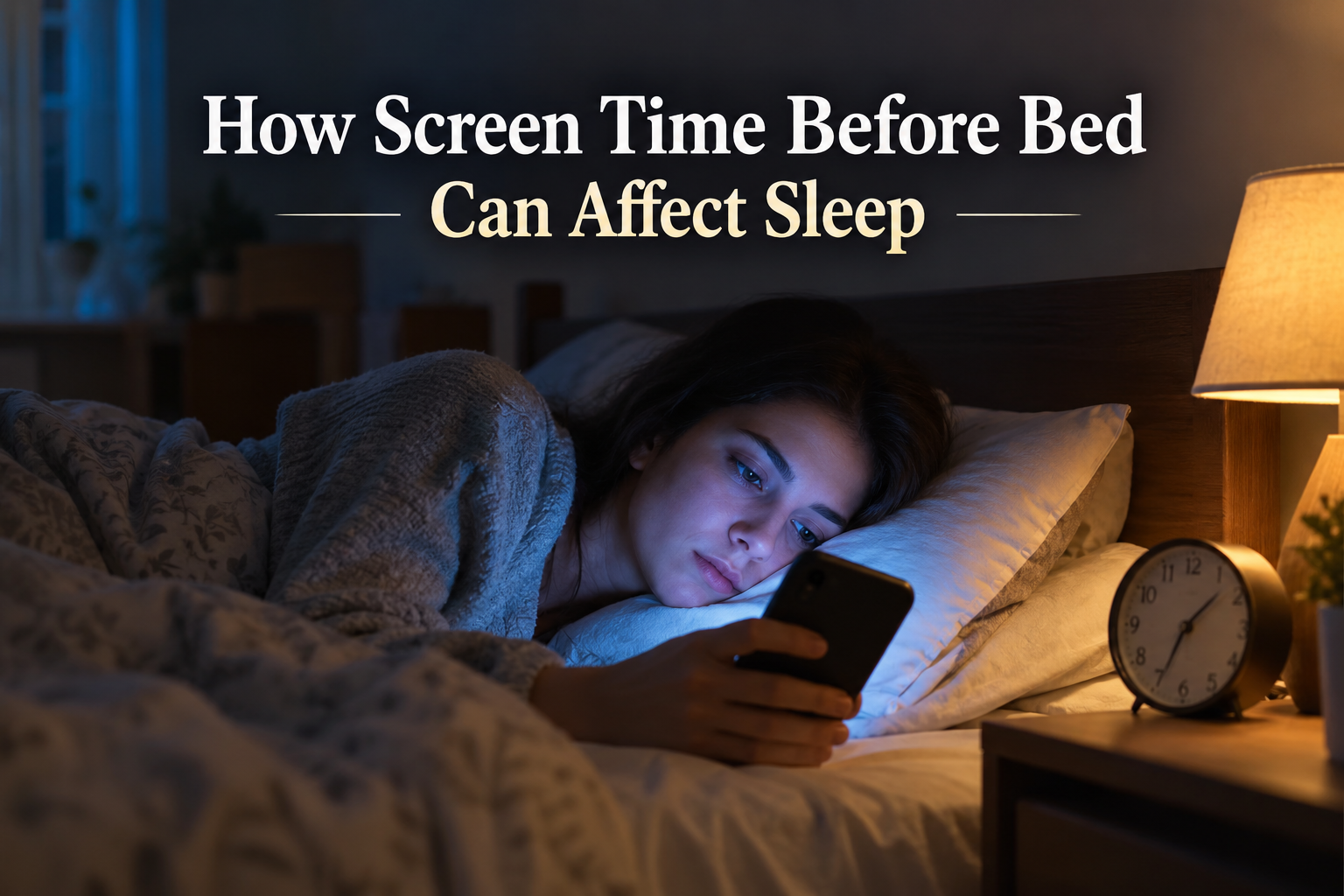
Modern life is closely connected with screens. We use smartphones to communicate, laptops to work, televisions to relax, and tablets to read or watch videos. These devices are useful, but using them late at night can affect the quality of sleep. Many people spend the final hour of their day scrolling through social media, watching videos, replying to messages, or reading news without realizing how strongly this habit may influence the body and mind.
Understanding how screen time before bed can affect sleep is important because good sleep supports almost every part of daily health. Sleep helps the body recover, supports memory, improves concentration, and prepares us for the next day. When screen use interferes with normal sleep patterns, people may find it harder to fall asleep, stay asleep, or wake up feeling refreshed.
Why Sleep Is Important for the Body
Sleep is not simply a period when the body becomes inactive. During sleep, many important processes continue inside the body. The brain organizes information gathered during the day, muscles recover, hormones are regulated, and the immune system performs important maintenance work.
Adults generally need several hours of quality sleep each night to function properly. The exact amount varies between individuals, but regular and restful sleep is essential for good health.
A poor night of sleep may cause tiredness the next morning. Repeated sleep disruption can also affect concentration, mood, productivity, appetite, and daily energy.
Because sleep is closely connected with our daily routine, habits before bedtime can make a noticeable difference.
How Screen Time Before Bed Can Affect Sleep
Screen time before bed can affect sleep in several ways. One of the main reasons is that screens keep both the eyes and brain active at a time when the body should gradually be preparing for rest.
When someone lies in bed watching videos or scrolling through social media, the brain continues receiving information. New images, messages, sounds, and stories keep the mind engaged.
Instead of becoming calm and sleepy, the person may remain mentally alert.
This can delay the natural transition from being awake to falling asleep.
The Role of Light From Screens
Phones, tablets, computers, and televisions produce visible light. Some of this light contains shorter wavelengths that can influence the body’s internal timing system.
The human body follows a natural daily pattern known as the circadian rhythm. This internal clock helps control when we feel awake and when we feel sleepy.
During the evening, darkness normally sends a signal to the body that nighttime is approaching. In response, the body begins preparing for sleep.
Bright screens can interfere with this natural signal.
Using a bright phone close to the face late at night may make the brain feel that it should remain alert for longer. This can make falling asleep more difficult for some people.
Screen Time and Melatonin
Melatonin is a hormone involved in the body’s sleep and wake cycle. The body normally produces more melatonin during the evening as darkness increases.
Light exposure at night can influence this process.
Looking at bright screens close to bedtime may reduce or delay the natural rise in melatonin. As a result, the feeling of sleepiness may arrive later than expected.
This does not mean that everyone reacts to screen light in exactly the same way. Screen brightness, distance from the device, length of use, and individual sensitivity can all influence the effect.
However, reducing bright screen exposure before sleep may help create a more natural bedtime routine.
The Brain Remains Mentally Active
Light is only one part of the problem. The type of content we consume also matters.
Social media platforms, games, videos, news websites, and messaging applications are designed to keep our attention. Every new post or notification gives the brain another reason to stay engaged.
Someone may plan to check their phone for five minutes but continue scrolling for thirty minutes or longer.
The brain may also start thinking about what it has just seen.
A work email may create stress. A dramatic video may create excitement. A news story may cause worry. A social media post may lead to comparison or emotional reactions.
All of these mental activities can make relaxation more difficult.
Screen Time Can Delay Bedtime
One of the simplest ways screen time affects sleep is by taking away time that could have been spent sleeping.
Many people do not intentionally decide to sleep less. Instead, bedtime gradually becomes later because they continue using their phones.
For example, a person may normally plan to sleep at 10:30 at night. They begin watching short videos at 10:15 and continue until 11:30 without noticing how much time has passed.
Even if they fall asleep quickly afterward, they have already lost an hour of potential sleep.
When this happens regularly, the total amount of sleep can gradually decrease.
Social Media Can Make It Harder to Relax
Social media can be particularly stimulating before bedtime because the content changes constantly.
One moment a person may be watching a funny video, and the next moment they may see stressful news, a personal message, or an exciting update.
This constant emotional switching keeps the brain active.
Some people also feel pressure to respond immediately when they receive messages at night. Others repeatedly check whether someone has replied or reacted to their posts.
Creating a clear boundary between social media and bedtime may help the mind settle more easily.
Notifications Can Interrupt Sleep
The effect of smartphones does not always end after a person falls asleep.
Notifications, vibrations, calls, or screen flashes during the night can disturb sleep.
Sometimes a notification fully wakes a person. In other cases, it may cause a brief interruption that the person does not clearly remember the next morning.
Even short disruptions can reduce the continuity of sleep.
Keeping the phone on silent mode or placing it away from the bed can reduce unnecessary nighttime disturbances.
Watching Videos Before Bed
Watching television or online videos before sleeping has become a common evening routine.
Some people find television relaxing, but watching exciting or emotionally intense content can sometimes delay sleep.
A person may also decide to watch one episode and then continue with several more.
Streaming platforms make this especially easy because the next episode may begin automatically.
Choosing calmer content and setting a clear stopping time can help prevent entertainment from pushing bedtime later.
Gaming and Sleep
Video games can be even more stimulating than passive screen activities because they require active participation.
Competitive games may increase excitement and concentration. Players may become focused on winning, completing a mission, or reaching the next level.
After an intense gaming session, the brain may need time to calm down.
For this reason, finishing gaming sessions earlier in the evening may be helpful for people who struggle to fall asleep quickly.
Work Related Screen Time
Not all nighttime screen use is for entertainment.
Many people check work emails, complete assignments, attend online meetings, or finish office tasks late at night.
Work related screen time can affect sleep because it combines light exposure with mental pressure.
Reading a stressful email before bed may cause someone to continue thinking about work while trying to sleep.
Creating a clear ending time for work can help separate professional responsibilities from personal rest.
How Poor Sleep May Affect the Next Day
When screen time reduces sleep quality or sleep duration, the effects may become noticeable the next morning.
A person may feel tired even after spending several hours in bed. Concentration may feel more difficult, and normal tasks may require more effort.
Poor sleep can also affect patience and mood.
Some people notice that they become more irritable or less motivated after a bad night of sleep.
Others may depend on extra coffee or sugary foods to maintain energy during the day.
These habits can sometimes create another cycle of poor sleep if caffeine is consumed too late.
Screen Time and Sleep in Children
Screen habits are especially important for children because their daily routines strongly influence sleep patterns.
Children may use tablets for games, videos, homework, or communication.
If screen use continues close to bedtime, children may resist going to sleep because they are still mentally engaged.
Parents can help by creating a consistent evening routine that gradually becomes quieter as bedtime approaches.
Reading printed books, preparing clothes for the next day, talking with family, or listening to calm music can help children move from activity to rest.
Screen Time and Sleep in Teenagers
Teenagers often spend significant time using smartphones because phones are closely connected with social interaction.
Messages, social media, entertainment, and schoolwork may all happen on the same device.
The fear of missing messages can make it difficult to put the phone away.
Keeping phones outside the bedroom or using scheduled quiet settings may help teenagers protect their sleep without completely avoiding technology.
How Long Before Bed Should Screens Be Reduced
There is no single rule that works perfectly for everyone.
However, creating some screen free time before sleep can be useful.
For many people, reducing screens around thirty minutes to one hour before bedtime is a practical starting point.
Some people may benefit from a longer break, especially if they frequently struggle with falling asleep.
The goal is not necessarily to remove technology from life. The goal is to give the brain a transition period between daytime activity and nighttime rest.
Lower the Screen Brightness at Night
When screen use cannot be avoided, lowering brightness may help reduce unnecessary light exposure.
Many devices also include night settings that make the screen appear warmer during evening hours.
These features can make nighttime viewing more comfortable.
However, changing screen color does not completely solve the problem because stimulating content can still keep the brain awake.
Reducing both brightness and overall screen time is usually more helpful than relying on one setting alone.
Keep the Phone Away From the Bed
Placing a phone beside the pillow makes it easy to check messages whenever sleep does not come immediately.
Keeping the phone farther away creates a small barrier between the person and the habit of constant checking.
Some people place their phone on a desk across the room.
Others keep it outside the bedroom completely.
If the phone is mainly used as an alarm, a simple alarm clock can be used instead.
Create a Relaxing Bedtime Routine
Replacing screen time with calmer activities can make reducing phone use easier.
A good bedtime routine does not need to be complicated.
Reading a printed book, taking a warm shower, preparing for the next day, practicing gentle stretching, listening to quiet music, or spending a few minutes in peaceful reflection can help signal that the day is ending.
Repeating the same routine each evening can help the body recognize when it is time to prepare for sleep.
Keep a Regular Sleep Schedule
Screen habits are only one part of healthy sleep.
Going to bed and waking up at approximately the same time each day can support the body’s natural rhythm.
When bedtime changes greatly from one day to another, the body may find it harder to maintain a stable sleep pattern.
A regular schedule combined with reduced evening screen use can create a stronger foundation for better sleep.
Make the Bedroom Comfortable for Sleep
The sleeping environment also matters.
A dark, quiet, and comfortable room can support restful sleep.
Bright lights, loud television, constant notifications, and uncomfortable temperatures may make sleeping more difficult.
The bedroom should ideally feel like a place for rest rather than an extension of the workplace or entertainment room.
Pay Attention to Your Own Sleep Patterns
Everyone responds differently to technology.
Some people can use a phone shortly before bed and fall asleep quickly. Others notice that even a short period of screen use makes them feel more alert.
A useful approach is to observe personal patterns.
Try reducing evening screen time for several nights and notice whether falling asleep becomes easier.
You may also notice changes in morning energy, concentration, and mood.
Small experiments with your routine can help you discover what works best for your body.
Final Thoughts
Understanding how screen time before bed can affect sleep can help people make better evening choices. Smartphones, televisions, tablets, and computers are valuable tools, but using them late into the night can keep the brain active, delay bedtime, expose the eyes to bright light, and interrupt the body’s natural preparation for sleep.
Improving sleep does not always require major lifestyle changes. Simple habits such as reducing screen use before bedtime, lowering screen brightness, turning off unnecessary notifications, keeping the phone away from the bed, and following a calming evening routine can make a meaningful difference.
Technology is now a normal part of everyday life, so the goal is not to avoid screens completely. A better approach is to use them thoughtfully. Giving the body and mind some quiet time before sleep can support a healthier sleep routine and help you wake up feeling more refreshed, focused, and ready for the day.