For many years, fat was treated as something people should avoid if they wanted to stay healthy. Low fat diets became popular, and many people started believing that eating fat automatically led to weight gain and health problems. After reading more about nutrition, I understood that this idea is too simple. The body actually needs certain fats every day to work properly.
Healthy fats are an important part of a balanced diet because they provide energy, support the brain, help the body absorb vitamins, protect organs, and contribute to normal hormone production. The important point is not to remove fat completely from the diet. It is to understand which fats are healthier and how much should be eaten.
When healthy fats are included in sensible portions, they can support long term health and make everyday meals more satisfying.
What Are Healthy Fats?
Dietary fats are nutrients found in many foods. They are usually divided into different types based on their chemical structure.
Healthy fats mainly include monounsaturated fats and polyunsaturated fats. These fats are commonly found in foods such as olive oil, nuts, seeds, avocados, fish, and some plant oils.
Polyunsaturated fats also include omega 3 and omega 6 fatty acids. These are important because the body cannot produce enough of some of them on its own. They must come from food.
Saturated fats are found in foods such as butter, fatty meat, full fat dairy products, coconut oil, and many processed foods. They do not need to be completely avoided, but they are generally best consumed in moderation.
Trans fats are the type that deserves the most caution. Artificial trans fats have been used in some fried and processed foods because they improve texture and shelf life. Regular intake is associated with poor heart health, so choosing minimally processed foods is usually a better approach.
Understanding these differences makes it easier to see why all dietary fat should not be placed in the same category.
Healthy Fats Provide Concentrated Energy
Fat is one of the body’s main sources of energy.
One gram of fat provides about nine calories, while one gram of carbohydrate or protein provides about four calories. This makes fat a concentrated source of energy.
The body can use carbohydrates for quick energy, but fat is especially useful for supporting longer lasting energy needs. Fat stored in the body also acts as an energy reserve that can be used when food is not immediately available.
This does not mean that eating more fat always gives better energy. Portion size still matters because fat contains more calories than protein or carbohydrates.
The goal should be to include a reasonable amount of nutritious fat rather than eating large amounts of fried or processed foods.
Healthy Fats Support Brain Function
The brain contains a large amount of fat, which helps explain why dietary fats are important for brain health.
Certain fatty acids are involved in the structure of brain cells and cell membranes. Omega 3 fatty acids are especially important in this area.
Foods such as salmon, sardines, mackerel, walnuts, chia seeds, and flaxseeds can provide useful fats for the diet.
A balanced intake of healthy fats, along with other nutrients, supports normal brain function, concentration, and overall neurological health.
Of course, no single food can improve memory or intelligence by itself. Brain health depends on the entire lifestyle, including sleep, physical activity, stress management, and an overall nutritious diet.
Still, healthy fats are one valuable part of that picture.
They Help the Body Absorb Important Vitamins
One reason healthy fats are important in a daily diet is that some vitamins need fat for proper absorption.
Vitamins A, D, E, and K are known as fat soluble vitamins.
These vitamins perform many important functions in the body. Vitamin A supports vision and immune function. Vitamin D contributes to bone health. Vitamin E acts as an antioxidant. Vitamin K plays an important role in normal blood clotting and bone health.
If a meal contains almost no fat, the absorption of these vitamins may not be as effective.
For example, adding a small amount of olive oil to vegetables can improve the absorption of certain fat soluble nutrients. Eating nuts or seeds with a salad can have a similar benefit.
This is one reason completely fat free meals are not always the healthiest option.
Healthy Fats Support Heart Health
One of the biggest reasons to choose healthy fats is their role in cardiovascular health.
Replacing some saturated fats with unsaturated fats can support healthier cholesterol levels.
Monounsaturated fats are found in foods such as olive oil, peanuts, almonds, and avocados. Polyunsaturated fats are found in foods such as walnuts, sunflower seeds, fatty fish, and some vegetable oils.
These foods can be useful alternatives to foods that are very high in saturated fat.
The key word is replacement.
Simply adding large amounts of olive oil or nuts to an already high calorie diet may not provide the same benefit. It is often better to replace less healthy fats with healthier choices.
For example, a person may use olive oil instead of butter in some meals or choose fish instead of processed meat.
Small changes like these can gradually improve the overall quality of the diet.
Omega 3 Fatty Acids Have Special Importance
Omega 3 fatty acids receive a lot of attention because they are involved in several important body functions.
There are different forms of omega 3 fats. EPA and DHA are commonly found in fatty fish, while ALA is found in plant foods such as flaxseeds, chia seeds, and walnuts.
These fats contribute to normal heart, brain, and cell function.
Fatty fish such as salmon, sardines, trout, and mackerel are among the best known sources.
People who do not eat fish can still obtain ALA from plant foods. Including a variety of seeds, nuts, and other nutritious foods can help improve overall fat quality.
Rather than focusing only on supplements, it is usually sensible to first improve the quality of everyday meals.
Healthy Fats Help Build Cell Membranes
Every cell in the human body has a membrane around it.
Fats are important components of these membranes. They help provide structure while allowing cells to communicate and function normally.
This may not be something we notice in everyday life, but it shows how deeply fats are involved in human biology.
Dietary fats are not simply stored under the skin. They participate in many processes throughout the body.
This is another reason completely eliminating fat from the diet is unnecessary and potentially unhelpful.
Fat Is Important for Hormone Production
Fats also play a role in hormone production.
Certain hormones are made from cholesterol and other fat related substances. Hormones help regulate many processes, including growth, metabolism, reproduction, and stress responses.
A balanced diet that includes enough healthy fat supports the body’s normal hormone related functions.
At the same time, consuming very large amounts of fat does not automatically improve hormone levels. Nutrition works best when there is balance between healthy fats, protein, carbohydrates, vitamins, minerals, and fiber.
The body needs many nutrients working together rather than one nutrient in extreme amounts.
Healthy Fats Can Make Meals More Satisfying
A meal containing some healthy fat can often feel more satisfying than a meal made mostly from refined carbohydrates.
Fat takes time to digest and can contribute to feelings of fullness after eating.
For example, oatmeal topped with a small amount of nuts may feel more satisfying than plain sweetened cereal. A salad with avocado or seeds may also be more filling than vegetables alone.
This can help people create balanced meals without constantly feeling hungry.
However, portion control is important because foods rich in fat can contain many calories in a relatively small serving.
A handful of nuts can be nutritious. Eating several large handfuls without paying attention to portions can quickly increase calorie intake.
Healthy does not mean unlimited.
Healthy Fats Protect Internal Organs
Body fat has several normal functions.
Some fat provides cushioning around organs and helps protect them from physical impact.
Fat under the skin also contributes to insulation, which helps the body maintain temperature.
People sometimes think of body fat as having no useful purpose, but a healthy amount of fat is necessary for normal body function.
Problems usually arise when body fat becomes excessively high or extremely low.
Maintaining a healthy weight through balanced eating, regular activity, proper sleep, and long term habits is more important than trying to remove dietary fat completely.
Best Food Sources of Healthy Fats
There are many natural foods that provide beneficial fats.
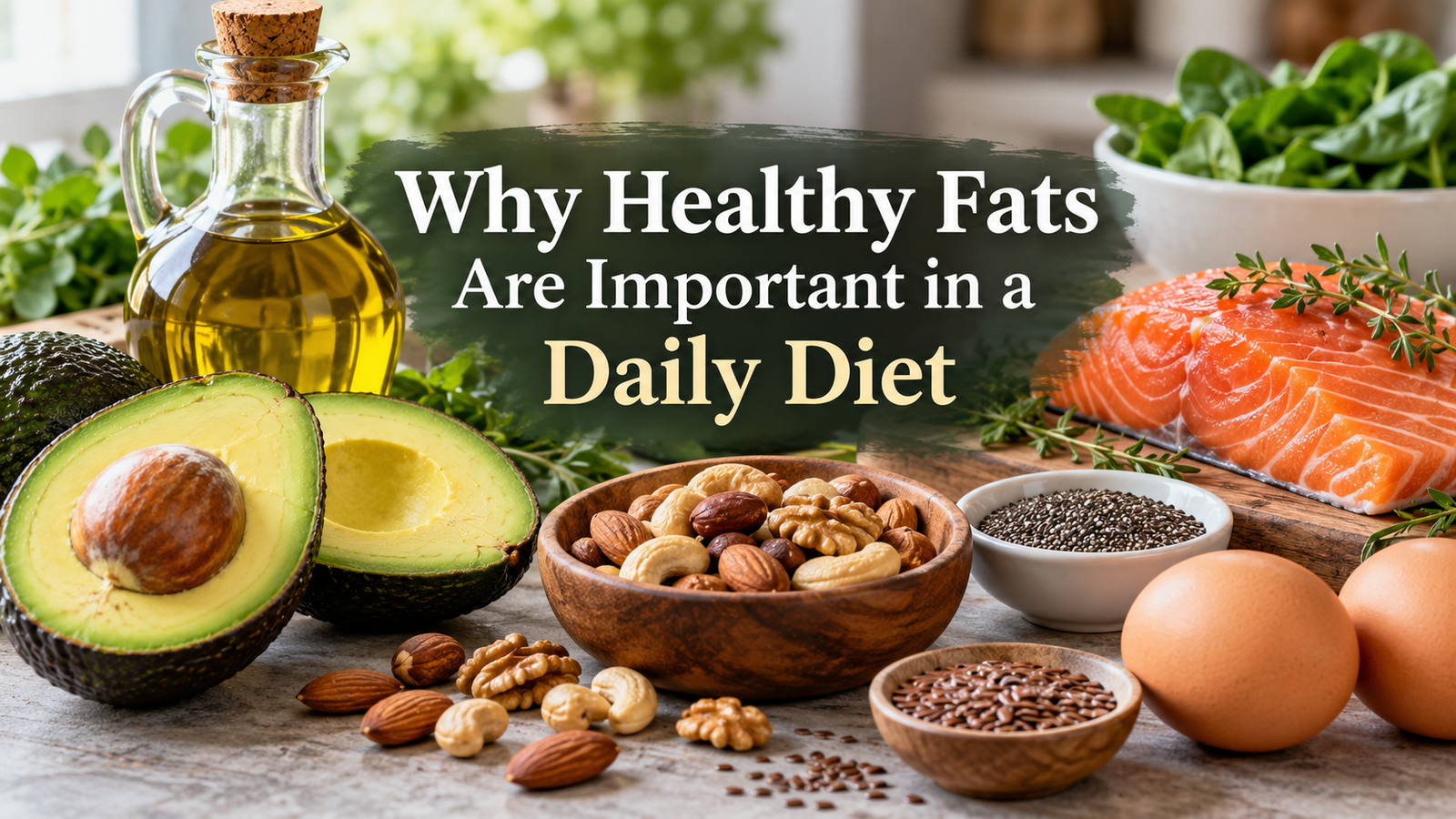
Nuts are a convenient choice. Almonds, walnuts, pistachios, peanuts, and cashews provide fats along with protein, minerals, and other nutrients.
Seeds are another useful option. Flaxseeds, chia seeds, sesame seeds, pumpkin seeds, and sunflower seeds can easily be added to meals.
Fish, especially fatty fish, provides omega 3 fatty acids along with high quality protein.
Olive oil can be used in cooking and salad dressings. Avocado provides mostly monounsaturated fat along with fiber and several nutrients.
Eggs also contain fat along with protein, vitamins, and minerals.
The best approach is variety. Different foods provide different nutrients, so depending on one source alone is unnecessary.
Healthy Fats and Weight Management
Some people avoid healthy fats because they are afraid of gaining weight.
It is true that fat contains more calories per gram than protein or carbohydrates, so eating excessive amounts can contribute to a calorie surplus.
However, healthy fats can still fit into a weight management plan.
The important factors are portion size, total calorie intake, food quality, and overall lifestyle.
For example, a small serving of nuts may provide useful nutrients and help control hunger. On the other hand, repeatedly eating large amounts of fried foods can make calorie control difficult.
Weight management is not about removing one nutrient. It is about finding a sustainable balance that a person can maintain.
How to Add Healthy Fats to Daily Meals
Adding healthier fats does not require a complicated diet.
At breakfast, nuts or seeds can be added to oatmeal, yogurt, or whole grain cereal.
At lunch, a salad can include seeds, avocado, or a small amount of olive oil based dressing.
For snacks, nuts can replace highly processed chips or biscuits on some days.
At dinner, fish can occasionally replace processed or fatty meat.
Cooking methods also matter. Grilling, baking, steaming, and lightly sautéing food can help reduce dependence on deep frying.
These small habits are often more practical than following a strict diet that is difficult to maintain.
Fats That Should Be Limited
Although fat is necessary, not every source should be eaten freely.
Foods high in trans fats should be avoided as much as possible. Highly processed baked goods, some deep fried foods, and certain packaged snacks may contain poor quality fats.
Saturated fat should generally be consumed in moderation. Common sources include butter, ghee, fatty cuts of meat, cream, and some processed foods.
This does not mean these foods can never be eaten. The overall pattern of the diet matters more than one occasional meal.
A person who mostly eats vegetables, fruit, whole grains, legumes, lean protein, nuts, seeds, and other minimally processed foods can still enjoy occasional richer foods without destroying an otherwise healthy eating pattern.
Balance Matters More Than Perfection
Nutrition advice can sometimes make healthy eating sound complicated.
In reality, a balanced diet does not require perfection.
Healthy fats are only one part of good nutrition. The body also needs carbohydrates, protein, fiber, vitamins, minerals, and water.
Instead of thinking about foods as completely good or bad, it can be more useful to think about frequency and quantity.
Olive oil may be a healthy fat, but pouring excessive amounts over every meal is unnecessary. Nuts are nutritious, but portion size still matters. Fish can be beneficial, but variety remains important.
Good nutrition is usually built through consistent everyday choices rather than extreme rules.
Final Thoughts
Healthy fats are important in a daily diet because the body uses them for much more than energy. They contribute to brain function, vitamin absorption, cell structure, hormone production, organ protection, and normal body processes.
The healthiest approach is not to eliminate fat but to improve its quality.
Foods such as nuts, seeds, olive oil, avocados, eggs, and fatty fish can provide useful fats when eaten in reasonable portions. At the same time, highly processed foods containing poor quality fats should be limited.
A balanced diet should include healthy fats together with vegetables, fruits, whole grains, protein rich foods, and enough water.
After understanding how fats work in the body, it becomes clear that dietary fat should not automatically be treated as the enemy. Choosing the right type and eating it in sensible amounts can make healthy fats a valuable part of everyday nutrition and long term wellbeing.