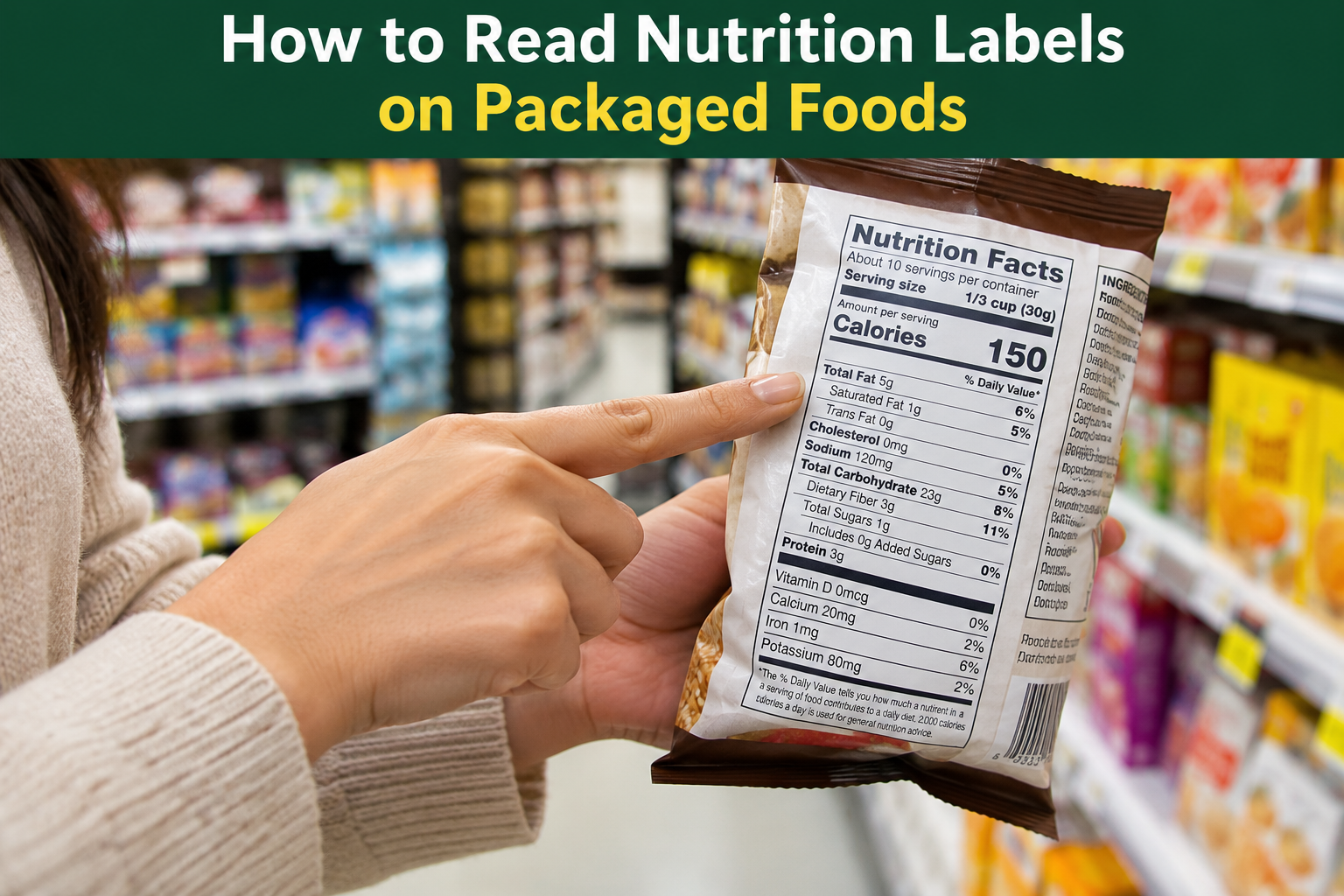
Packaged foods have become a normal part of daily life. From breakfast cereals and bread to yogurt, snacks, sauces, frozen foods, and ready to eat meals, many of the foods we buy come with a nutrition label. These labels may look confusing at first, but they can become very useful once you understand what each section means.
Learning how to read nutrition labels can help you compare products, control portion sizes, understand how much sugar or salt you are eating, and make better food choices. You do not need to be a nutrition expert to use a food label. You only need to know which numbers matter and how to interpret them.
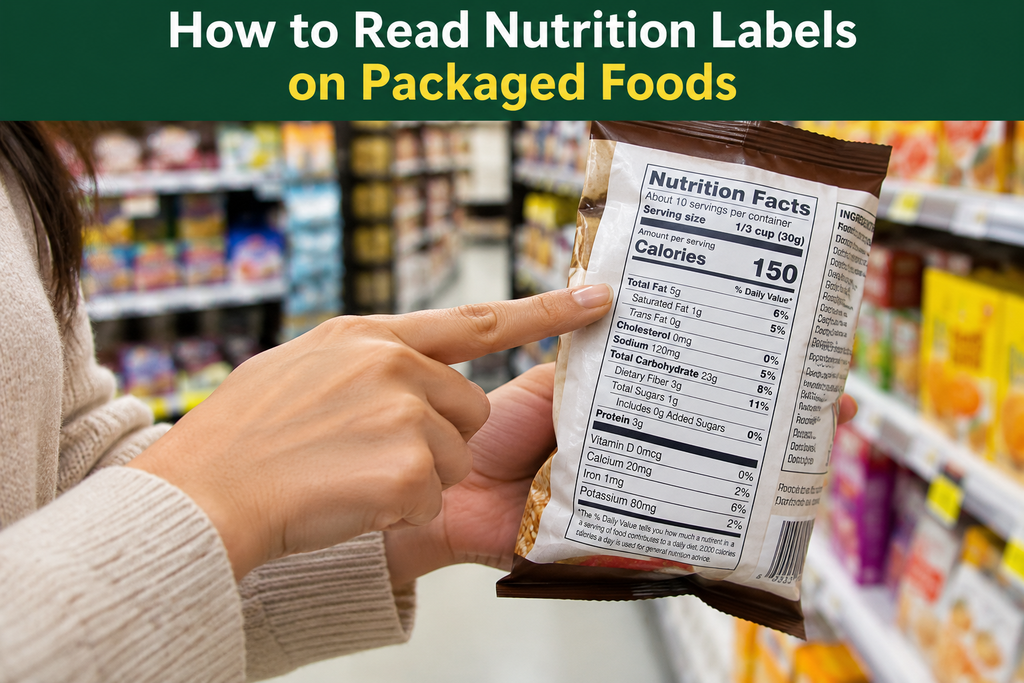
A nutrition label provides information about the nutrients contained in a packaged food. It usually includes serving size, calories, fat, carbohydrates, protein, sugar, sodium, vitamins, minerals, and an ingredient list. Some packages may also include additional claims such as high fiber, low fat, reduced sugar, or a source of protein.
The most useful way to read nutrition labels is to start from the top and work your way down.
Start With the Serving Size
The serving size is one of the most important parts of a nutrition label because almost every number on the label is based on it.
For example, a packet of biscuits may contain four servings. If one serving contains 150 calories and you eat the whole packet, you may actually consume 600 calories.
Many people accidentally underestimate how much they are eating because they assume one package equals one serving. This is not always true.
When reading a nutrition label, check both the serving size and the number of servings in the package.
A serving size may be listed in grams, milliliters, cups, pieces, slices, or another common measurement.
It is also useful to compare the listed serving size with the amount you normally eat. If your portion is twice the serving size, most of the nutritional values will also be approximately twice as much.
Understanding serving size makes the rest of the nutrition label much easier to understand.
Look at the Calories
Calories tell you how much energy a food provides.
Your body needs energy for breathing, walking, working, thinking, digestion, exercise, and many other functions. However, regularly consuming more energy than your body uses may contribute to weight gain.
Calories should not be the only factor you consider when choosing food.
For example, two foods may contain the same number of calories but have very different nutritional value.
A handful of nuts and a sugary snack may contain similar calories, but nuts can provide protein, healthy fats, fiber, vitamins, and minerals.
This is why it is better to look at calories together with the rest of the nutrition information.
Also remember that the calorie number usually applies to one serving, not necessarily the entire package.
Check the Total Fat
Fat is an important nutrient that supports many functions in the body. It helps provide energy, supports cells, and helps the body absorb certain vitamins.
However, different types of fat can affect health differently.
Nutrition labels may list total fat along with saturated fat and sometimes trans fat.
Saturated fat is found in foods such as butter, high fat dairy products, fatty meats, some baked foods, and certain processed foods.
Eating large amounts of saturated fat regularly may not be ideal for heart health.
Trans fats are often considered less desirable because they can negatively affect blood cholesterol levels. Many food manufacturers have reduced or removed industrial trans fats from their products, but it is still useful to check the label.
Unsaturated fats are generally considered better choices and are found in foods such as nuts, seeds, fish, olives, and vegetable oils.
A product that contains fat is not automatically unhealthy. The type of fat and the overall nutritional quality of the food are more important.
Pay Attention to Sodium
Sodium is another important number on nutrition labels.
Sodium is a mineral that helps regulate fluids and supports normal nerve and muscle function. However, packaged and processed foods can sometimes contain large amounts of sodium.
Foods that are often high in sodium include instant noodles, processed meats, chips, sauces, soups, frozen meals, fast foods, and salty snacks.
Eating too much sodium regularly may contribute to high blood pressure in some people.
When comparing similar products, look at the sodium amount per serving. Choosing the product with less sodium can be a simple way to reduce your overall salt intake.
Remember that salt and sodium are related, but they are not exactly the same thing. Sodium is one component of salt.
Understand Total Carbohydrates
Carbohydrates are one of the body’s main sources of energy.
On a nutrition label, total carbohydrates may include fiber, sugars, and starch.
Carbohydrates are found naturally in many foods, including fruits, vegetables, grains, beans, and dairy products. They are also found in sweets, sugary drinks, biscuits, cakes, and many processed foods.
Instead of avoiding carbohydrates completely, it is more useful to look at the type of carbohydrate you are eating.
Foods that contain fiber and are less heavily processed often provide better nutritional value than foods made mainly from refined flour and added sugar.
Whole grain bread, oats, brown rice, beans, fruits, and vegetables are examples of foods that provide useful carbohydrates.
Look at Dietary Fiber
Fiber is an important part of a balanced diet.
It supports normal digestion, helps maintain regular bowel movements, and may help you feel full for longer.
Fiber is naturally found in vegetables, fruits, whole grains, beans, lentils, nuts, and seeds.
When reading packaged food labels, fiber can help you distinguish between highly refined products and foods made with more whole ingredients.
For example, two breads may look similar, but one may contain much more fiber because it is made with whole grains.
Breakfast cereals, crackers, snack bars, and other grain products can also vary greatly in fiber content.
A higher fiber product may often be the better choice, especially if the rest of the nutrition profile is reasonable.
Read the Sugar Information Carefully
Sugar is one of the areas that many people focus on when reading nutrition labels.
Some labels show total sugars and added sugars separately.
Total sugars include sugars naturally present in foods as well as sugars that may have been added during processing.
For example, milk and fruit naturally contain sugar.
Added sugars are sugars added to foods during preparation or manufacturing.
They may appear in products such as soft drinks, flavored yogurt, cereals, biscuits, sauces, desserts, and snack foods.
Common names for added sugar include sugar, glucose syrup, corn syrup, fructose, sucrose, malt syrup, cane sugar, honey, and other sweeteners.
One of the best ways to understand sugar content is to check both the nutrition label and the ingredient list.
A product may look healthy from the front of the package but still contain a considerable amount of added sugar.
Check the Protein Content
Protein helps build and repair tissues and supports muscles, enzymes, hormones, and many other processes in the body.
Nutrition labels usually show protein in grams per serving.
Good protein sources may include eggs, dairy products, fish, chicken, meat, beans, lentils, soy foods, nuts, and seeds.
Some packaged products are marketed as high protein foods. However, it is still important to read the full label.
A product may contain a good amount of protein but also be high in sugar, sodium, or saturated fat.
Looking at the entire nutrition label gives you a more complete picture than focusing on one nutrient.
Understand Percent Daily Value
Many nutrition labels include a percentage known as Percent Daily Value.
This percentage gives you an idea of how much one serving of a food contributes to a typical daily intake of a particular nutrient.
For example, if a food contains 20 percent of the daily value for calcium, one serving provides a significant portion of the suggested daily intake.
Percent Daily Value can be especially useful when comparing foods.
A lower percentage may be preferred for nutrients such as sodium and saturated fat, while a higher percentage can be helpful for nutrients such as fiber, calcium, iron, potassium, and certain vitamins.
Daily value percentages are general guides. Individual nutritional needs can vary depending on age, body size, activity level, health conditions, and other factors.
Look at Vitamins and Minerals
Nutrition labels may list important vitamins and minerals such as vitamin D, calcium, iron, and potassium.
These nutrients play important roles in maintaining normal body functions.
Calcium supports bones and teeth.
Iron is important for the formation of healthy red blood cells and helps transport oxygen around the body.
Potassium supports normal muscle and nerve function and helps maintain fluid balance.
Vitamin D supports bone health and helps the body absorb calcium.
Packaged foods should not be your only source of vitamins and minerals. A varied diet that includes vegetables, fruits, grains, proteins, and other nutrient rich foods remains important.
However, nutrition labels can help you identify foods that contribute useful nutrients to your diet.
Do Not Ignore the Ingredient List
The ingredient list is one of the most valuable parts of a food package.
Ingredients are usually listed according to weight, starting with the ingredient present in the largest amount.
This means the first few ingredients can tell you a lot about the product.
For example, if sugar appears as one of the first ingredients in a breakfast cereal, the product may contain a significant amount of added sugar.
If whole wheat or another whole grain appears first in a bread product, that may indicate that the product contains more whole grains.
Ingredient lists can also help people identify allergens and ingredients they prefer to avoid.
Common allergens such as milk, eggs, wheat, soy, peanuts, tree nuts, fish, and shellfish may be highlighted depending on local food labeling regulations.
Be Careful With Health Claims
The front of food packaging is designed partly for marketing.
Words such as natural, light, fitness, healthy, reduced fat, no added sugar, multigrain, or high protein can make a product sound healthier than it actually is.
These claims do not always tell the whole story.
For example, a low fat product may contain additional sugar to improve flavor.
A multigrain product may contain several grains but still be made mainly from refined flour.
A product labeled no added sugar may still contain naturally occurring sugars.
This does not mean these products are necessarily bad. It simply means you should check the nutrition label and ingredient list rather than relying only on the claims printed on the front.
Compare Similar Products
One of the best uses of nutrition labels is comparing similar foods.
Imagine you are choosing between two breakfast cereals.
One may contain less sugar and more fiber.
The other may contain more sugar and less fiber.
Even if both packages advertise themselves as healthy, the nutrition labels can help you make a more informed decision.
The same comparison can be made with bread, yogurt, sauces, soups, snacks, frozen foods, and many other products.
Try to compare products using similar serving sizes whenever possible.
Watch for Hidden Sugars
Sugar can appear under many different names.
Some examples include glucose, fructose, sucrose, maltose, dextrose, corn syrup, rice syrup, cane syrup, fruit juice concentrate, honey, and molasses.
If several forms of sugar appear in the ingredient list, the product may contain more added sweeteners than you expect.
Reading the ingredient list carefully can help you recognize these hidden sugars.
You do not need to completely avoid every food containing sugar. The goal is simply to become more aware of how much you are consuming.
Look at the Whole Food, Not Just One Number
One of the biggest mistakes people make when reading nutrition labels is focusing on only one nutrient.
Some people look only at calories.
Others look only at fat, carbohydrates, or protein.
A better approach is to examine the whole nutritional profile.
Consider the serving size, calories, fiber, sugar, sodium, protein, fats, vitamins, minerals, and ingredients together.
Food quality cannot always be judged by a single number.
For example, nuts may contain relatively high calories and fat, but they also provide useful nutrients.
A low calorie snack may contain little protein, fiber, or nutritional value.
The complete picture matters.
Practice Reading Labels Regularly
Reading food labels becomes easier with practice.
At first, the numbers and percentages may seem complicated. After comparing products several times, you will begin to recognize which foods are higher or lower in certain nutrients.
You may start noticing that your favorite sauce contains a lot of sodium, or that one breakfast cereal has much more sugar than another.
These small discoveries can help you improve your food choices over time.
There is no need to study every package for several minutes. Once you know what to look for, reading a label can take only a few seconds.
Final Thoughts
Learning how to read nutrition labels on packaged foods is a practical skill that can help you make more informed decisions about what you eat.
Start by checking the serving size because all the other numbers are usually based on that amount. Then look at calories, fat, sodium, carbohydrates, fiber, sugar, and protein. Pay attention to vitamins and minerals when they are listed, and always check the ingredient list for additional information.
Do not rely entirely on attractive packaging or health claims printed on the front of a product. The nutrition label gives you a clearer picture of what the food actually contains.
You do not need to choose perfect foods every time. A healthy diet is built from your overall eating habits rather than a single meal or snack. By comparing products, watching portion sizes, choosing more fiber, limiting excessive added sugar and sodium, and paying attention to ingredients, you can gradually make smarter choices.
Nutrition labels are there to provide useful information. Once you understand how to read them, grocery shopping becomes easier, and choosing packaged foods that fit your nutritional goals becomes much more straightforward.