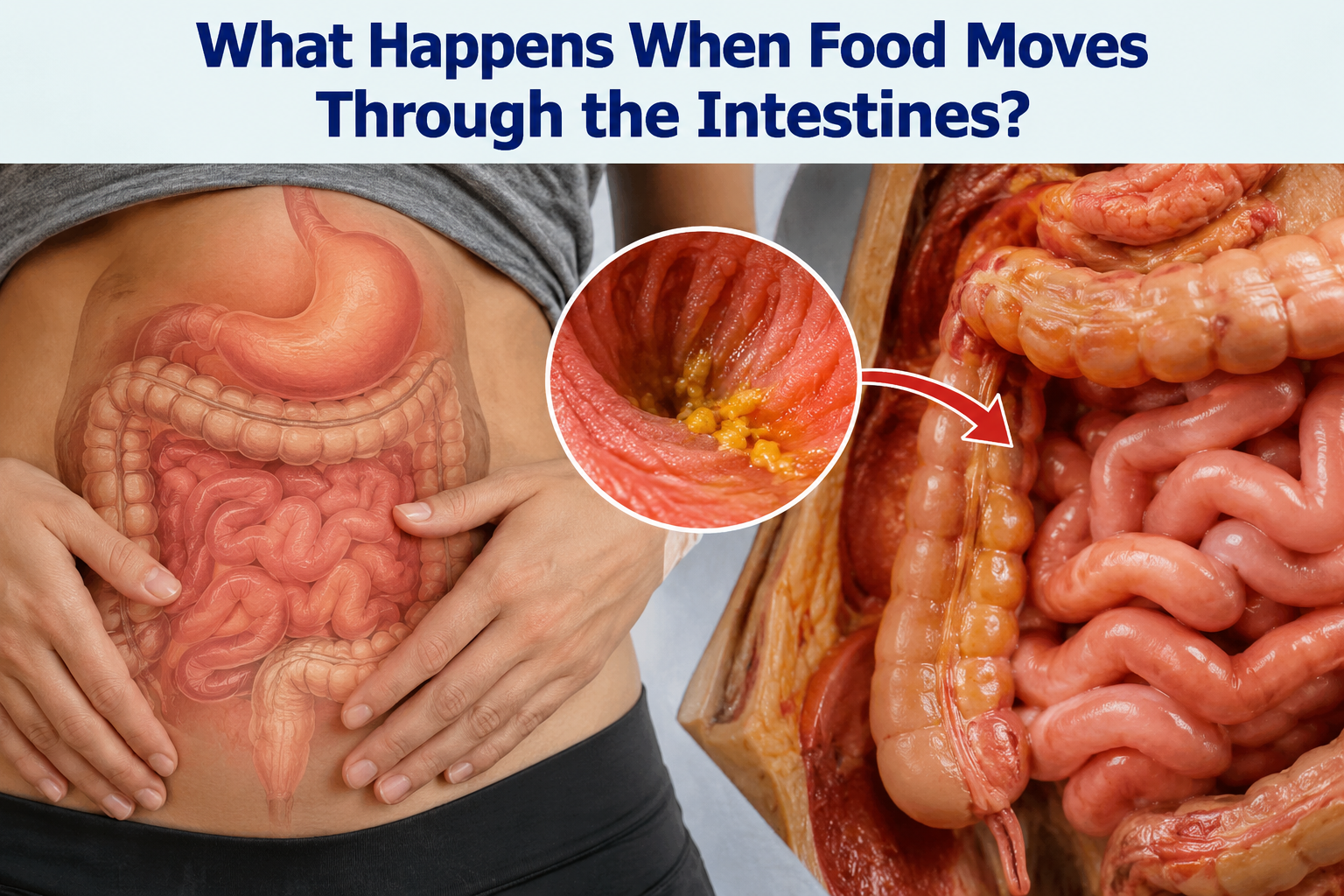
The human digestive system is designed to turn food into nutrients that the body can absorb and use. After food is chewed in the mouth and partially digested in the stomach, it enters the intestines. This is where some of the most important stages of digestion take place. The intestines help break food down further, absorb nutrients and water, support healthy gut bacteria, and prepare waste for removal from the body.
Understanding what happens when food moves through the intestines can make it easier to understand digestion as a whole. The process is carefully controlled by muscles, digestive juices, enzymes, bacteria, nerves, and hormones. Although we may not feel every stage happening, the intestines are constantly working to keep the body supplied with energy and essential nutrients.
Food Enters the Small Intestine
After food has been mixed and broken down in the stomach, it becomes a thick liquid known as chyme. The stomach slowly releases this material into the first part of the small intestine.
The small intestine is a long, narrow tube where most digestion and nutrient absorption occur. It is divided into three main sections called the duodenum, jejunum, and ileum.
The duodenum receives partially digested food from the stomach. At this stage, the food is still acidic because of stomach acid. The small intestine must create a more suitable environment for enzymes to work properly.
The pancreas releases bicarbonate and digestive enzymes into the small intestine. Bicarbonate helps reduce acidity, while digestive enzymes continue breaking down carbohydrates, proteins, and fats.
The liver also plays an important role by producing bile. Bile is stored in the gallbladder and released into the small intestine when needed. It helps the body digest and absorb fats.
The Small Intestine Continues Breaking Down Food
Food entering the small intestine still contains large molecules that cannot be absorbed directly into the bloodstream.
Digestive enzymes break these molecules into smaller parts.
Carbohydrates are mainly broken down into simple sugars such as glucose. Proteins are broken down into amino acids. Fats are separated into smaller components, including fatty acids and monoglycerides.
These smaller nutrients can then pass through the lining of the small intestine.
Different enzymes work on different nutrients. Some enzymes come from the pancreas, while others are produced by cells lining the small intestine.
This organized process allows the body to extract useful nutrients from the food we eat.
Muscles Push Food Through the Intestines
Food does not simply fall through the digestive system because of gravity. The intestinal walls contain smooth muscles that contract in a controlled pattern.
One important movement is called peristalsis.
Peristalsis involves waves of muscle contractions that push food forward through the digestive tract. These contractions happen automatically and do not require conscious effort.
Another type of movement helps mix food with digestive juices. This mixing allows enzymes to come into better contact with food particles.
The movement of the intestines is influenced by the nervous system, hormones, physical activity, stress, food composition, and overall health.
When intestinal movement becomes too fast, a person may develop loose stools. When it becomes too slow, constipation may occur.
Nutrients Are Absorbed Through the Intestinal Wall
The inner surface of the small intestine is specially designed for absorption.
Instead of being smooth, it contains millions of tiny finger shaped structures called villi. Each villus also contains even smaller structures called microvilli.
These structures greatly increase the surface area available for nutrient absorption.
Think of the intestinal lining as a highly efficient filtering surface. Nutrients from digested food move through the intestinal wall and enter either the bloodstream or the lymphatic system.
Glucose, amino acids, vitamins, minerals, and many other nutrients usually enter the blood.
Most digested fats enter small lymph vessels before eventually reaching the bloodstream.
Once nutrients enter the circulation, they can travel to different tissues and organs throughout the body.
The Blood Carries Nutrients to the Liver
Many nutrients absorbed from the small intestine first travel to the liver.
The liver acts like a processing center. It helps manage nutrients, stores certain substances, removes harmful compounds, and regulates energy supply.
For example, glucose can be used immediately for energy or stored in the liver as glycogen.
Amino acids can be used to build proteins needed for muscles, enzymes, hormones, and other tissues.
The liver also processes vitamins, minerals, fats, and many other compounds absorbed from food.
This shows that digestion does not end when nutrients pass through the intestinal wall. The body must still process and distribute them.
Most Nutrient Absorption Happens in the Small Intestine
The small intestine is responsible for absorbing the majority of nutrients from food.
The jejunum, which is the middle part of the small intestine, absorbs many carbohydrates, amino acids, fats, vitamins, and minerals.
The ileum, which is the final section, absorbs certain nutrients that remain, including vitamin B12 and bile salts.
By the time food reaches the end of the small intestine, most useful nutrients have already been removed.
What remains mainly includes water, fiber, bacteria, salts, undigested food particles, and substances that the body does not need.
This material then moves into the large intestine.
Food Residue Enters the Large Intestine
The large intestine is shorter than the small intestine, but it has a wider diameter. It includes the colon and rectum.
One of its most important jobs is to absorb water and electrolytes from the remaining digestive material.
When residue first enters the large intestine, it still contains a significant amount of water.
As it slowly moves through the colon, water is absorbed back into the body. This gradually changes the material from a liquid mixture into a more solid stool.
If too much water is absorbed, stools may become hard and difficult to pass. If too little water is absorbed, stools may remain loose.
This is one reason hydration and healthy intestinal movement are important for normal bowel function.
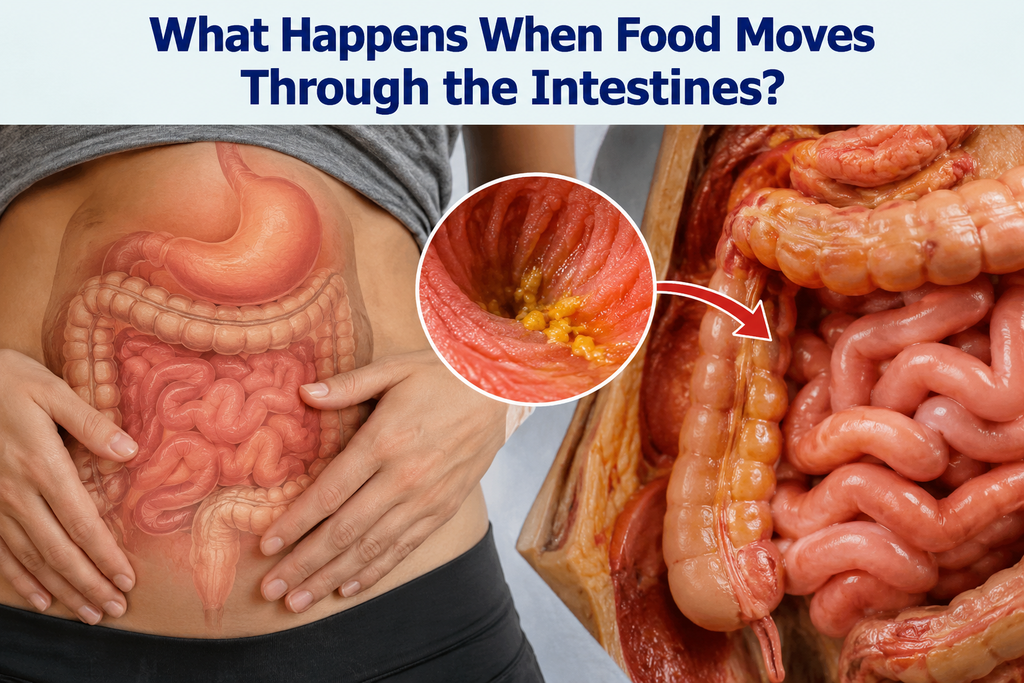
Gut Bacteria Act on Undigested Material
The large intestine contains trillions of microorganisms, including many species of bacteria.
Together, these microorganisms are often called the gut microbiota.
Some food components cannot be completely digested by human enzymes. Dietary fiber is a good example.
When certain types of fiber reach the large intestine, gut bacteria can ferment them.
During fermentation, bacteria produce compounds called short chain fatty acids. These substances can support cells in the colon and may contribute to overall digestive health.
Gut bacteria are also involved in the production of certain vitamins and help interact with the immune system.
A diverse diet containing vegetables, fruits, whole grains, legumes, nuts, and seeds may help support a healthy gut environment.
Gas Can Be Produced During Digestion
Gas is a normal part of intestinal digestion.
Some gas enters the digestive tract when a person swallows air while eating or drinking. Additional gas can be produced when gut bacteria ferment carbohydrates and fiber.
Common gases in the intestines include hydrogen, carbon dioxide, methane, and nitrogen.
The amount of gas produced varies from person to person.
Certain foods such as beans, lentils, onions, cabbage, and some whole grains may increase gas because they contain carbohydrates that gut bacteria easily ferment.
Gas usually leaves the body through burping or passing wind.
Mild gas after eating is often normal. However, frequent painful bloating or major changes in digestion may deserve medical attention.
Fiber Helps Food Move Through the Intestines
Fiber plays an important role in intestinal health.
Unlike many carbohydrates, fiber is not fully broken down and absorbed in the small intestine. Much of it reaches the large intestine.
There are different types of fiber.
Some forms absorb water and create a softer, gel like material. Other forms add bulk to stool and help food residue move through the digestive tract.
Eating enough fiber may help support regular bowel movements.
Good sources include vegetables, fruits, oats, whole grains, beans, lentils, nuts, and seeds.
However, increasing fiber too quickly can sometimes cause bloating or gas. It is usually better to increase fiber gradually while also drinking enough water.
Water Supports Normal Intestinal Movement
Water is essential throughout the digestive process.
It helps soften food, supports digestive juices, allows nutrients to dissolve, and helps stool remain easier to pass.
The large intestine adjusts the amount of water that remains in stool.
When the body needs more water, the colon may absorb additional fluid. This can make stool harder.
Drinking enough fluids can support normal digestion, especially when combined with sufficient fiber and regular movement.
Water needs vary depending on climate, body size, activity level, diet, and health conditions.
Stool Is Formed in the Colon
As food residue moves through the large intestine, more water is removed and stool gradually forms.
Stool contains water, bacteria, fiber, undigested food material, intestinal cells, and waste products.
The colon moves stool toward the rectum through muscular contractions.
Some contractions are small and help mix intestinal contents. Larger contractions can move stool longer distances through the colon.
These stronger movements may occur several times a day, especially after meals.
This explains why some people feel the need to use the bathroom shortly after eating.
The Rectum Stores Stool
The final part of the large intestine is the rectum.
The rectum temporarily stores stool before it leaves the body.
When enough stool enters the rectum, the walls stretch. Nerves send signals to the brain that create the urge to have a bowel movement.
Muscles around the anus help control when stool is released.
This process involves coordination between the intestines, nerves, brain, pelvic muscles, and anal muscles.
Regularly ignoring the urge to use the bathroom may sometimes contribute to constipation because stool stays in the colon longer and loses more water.
How Long Does Food Stay in the Intestines?
The time food spends in the digestive system varies greatly.
Food may pass through the stomach and small intestine within several hours, while movement through the large intestine can take much longer.
Total digestive transit time may range from around one day to several days depending on the individual.
Factors that can affect digestion speed include diet, fiber intake, hydration, physical activity, stress, age, medications, gut bacteria, and medical conditions.
A normal bowel pattern is different for everyone. Some people have bowel movements more than once a day, while others may go every other day.
The most important factor is whether the pattern is comfortable and normal for that individual.
What Can Slow Intestinal Movement?
Several lifestyle factors may slow movement through the intestines.
Low fiber intake is one common cause. A diet containing very little fruit, vegetables, whole grains, or legumes may not provide enough bulk for regular bowel movements.
Not drinking enough fluids can also make stool harder.
Physical inactivity may contribute to slower digestion in some people.
Stress can influence the nervous system and change intestinal movement.
Certain medications may also cause constipation.
Making gradual improvements in diet, hydration, and daily movement may support healthier intestinal function.
What Can Speed Up Intestinal Movement?
Sometimes food moves through the intestines too quickly.
This may happen during digestive infections, food intolerance, stress, or certain medical conditions.
When material passes through the large intestine too quickly, there may not be enough time to absorb sufficient water. This can lead to diarrhea.
Occasional loose stools can happen to almost anyone, especially after eating unusual foods or during a mild illness.
Persistent diarrhea, blood in stool, severe pain, dehydration, fever, or unexplained weight loss should be discussed with a healthcare professional.
Why Healthy Intestines Matter
The intestines do much more than simply move food through the body.
They are responsible for nutrient absorption, water balance, waste removal, interaction with gut bacteria, and communication with the immune and nervous systems.
Healthy intestinal function allows the body to obtain the nutrients it needs while safely removing material it cannot use.
A balanced diet, enough water, regular physical activity, proper sleep, and a variety of plant foods can all support normal digestive function.
Final Thoughts
When food moves through the intestines, it goes through a highly organized process of digestion, absorption, movement, fermentation, water recovery, and waste formation.
The small intestine completes most chemical digestion and absorbs nutrients such as sugars, amino acids, fats, vitamins, and minerals. The large intestine absorbs water, supports gut bacteria, and gradually forms stool.
Muscle contractions keep food moving forward, while enzymes and digestive fluids help break nutrients into forms that the body can use.
The entire process works quietly in the background every day. By eating a balanced diet, consuming enough fiber, drinking sufficient water, and staying physically active, we can support the intestines and help the digestive system perform its important job effectively.