
Digestion begins much earlier than many people realize. Most people think digestion starts when food reaches the stomach, but the process actually begins in the mouth. The way we chew food can influence how easily the digestive system handles a meal. Chewing food properly supports digestion by breaking food into smaller pieces, mixing it with saliva, and preparing it for the stomach and intestines.
In modern life, people often eat quickly. Busy schedules, mobile phones, work pressure, and television can make people finish meals without paying attention to how well they chew. Eating quickly may seem harmless, but proper chewing is an important part of healthy digestion.
Understanding how chewing supports digestion can help us develop healthier eating habits and enjoy meals more comfortably.
Digestion Starts in the Mouth
The mouth is the first major part of the digestive system. As soon as food enters the mouth, the teeth, tongue, and saliva begin working together.
The teeth physically break food into smaller pieces. The tongue moves the food around the mouth and helps mix it with saliva. Saliva makes food softer and easier to swallow.
This process is known as mechanical digestion because the food is physically broken into smaller particles.
At the same time, saliva begins another important process. It contains digestive enzymes that start breaking down certain nutrients before the food even reaches the stomach.
This means chewing is not simply about making food easier to swallow. It is the first active stage of digestion.
Chewing Breaks Food Into Smaller Pieces
One of the main benefits of chewing food properly is that it reduces the size of food particles.
Large pieces of food require more digestive effort. Smaller pieces provide a larger surface area for digestive enzymes to work on.
Imagine trying to dissolve one large piece of food compared with many small pieces. The smaller pieces are easier for digestive juices to reach and break down.
When food is thoroughly chewed, the stomach receives material that has already been partially processed. This can make the next stages of digestion more efficient.
Foods such as vegetables, whole grains, meat, nuts, and fruits especially benefit from careful chewing because their structures can take more time to break down.
Saliva Plays an Important Role in Digestion
Saliva is often overlooked, but it is extremely important for digestion.
When we chew, the salivary glands produce saliva and mix it with food. Saliva adds moisture and helps create a soft mass that can be swallowed safely.
Saliva also contains enzymes that begin the digestion of carbohydrates. One important enzyme starts breaking complex starches into simpler forms.
This is one reason why foods such as bread or rice may begin to taste slightly sweeter when they are chewed for a longer time.
The longer food remains in the mouth while being properly chewed, the more opportunity saliva has to mix with it.
Proper chewing therefore supports both the physical and chemical stages of digestion.
Chewing Helps the Stomach Work Efficiently
The stomach performs several important digestive functions. It mixes food with acids and enzymes and gradually turns it into a softer material that can pass into the small intestine.
When large pieces of food enter the stomach, the stomach has to work harder to break them down.
Proper chewing reduces this workload by ensuring that food enters the stomach in smaller pieces.
This does not mean chewing can prevent every digestive problem. However, eating slowly and chewing thoroughly may make digestion feel more comfortable for many people.
A meal should not feel like a race. Allowing enough time to chew gives the digestive system a better start.
Proper Chewing May Help Reduce Bloating
Bloating can occur for many different reasons, including food choices, digestive conditions, gas production, and eating habits.
Eating too quickly may increase the amount of air swallowed during meals. This extra air can contribute to feelings of fullness, pressure, or bloating.
People who eat very fast may also swallow larger pieces of food.
Chewing slowly encourages a calmer eating pattern. It may reduce unnecessary air swallowing and allow the digestive process to begin more gradually.
Proper chewing alone cannot solve every cause of bloating, but it can be one helpful part of healthier eating habits.

Chewing Encourages Slower Eating
Chewing food thoroughly naturally slows down the speed of a meal.
This is useful because the body needs time to recognize that food has been eaten. Signals from the stomach and digestive system gradually communicate with the brain and help create feelings of satisfaction.
When someone eats very quickly, it can be easier to consume more food before noticing fullness.
Slower eating gives the body more time to respond.
Chewing properly encourages you to pause between bites, notice the taste of food, and become more aware of how full you feel.
This can make meals more comfortable and enjoyable.
Better Chewing Supports Nutrient Breakdown
Food contains nutrients such as carbohydrates, proteins, fats, vitamins, and minerals.
The digestive system must break food down before many nutrients can be absorbed effectively.
Chewing does not complete this process, but it prepares food for later digestion.
By breaking food into smaller pieces, chewing increases the area available for digestive enzymes.
The stomach and small intestine can then continue breaking nutrients into forms that the body can absorb.
Good digestion depends on many factors, including healthy digestive organs, balanced food choices, hydration, and normal enzyme production. Proper chewing supports these processes by giving digestion a useful first step.
Chewing Is Especially Important for High Fiber Foods
Fiber rich foods are an important part of a balanced diet.
Vegetables, fruits, whole grains, beans, seeds, and nuts contain different types of fiber. Many of these foods require more chewing than soft or highly processed foods.
Chewing helps break down the physical structure of plant foods.
For example, raw carrots, apples, leafy vegetables, nuts, and whole grains contain firm textures that benefit from thorough chewing.
Although the human digestive system does not completely digest every type of fiber, breaking food into smaller pieces makes it easier to swallow and helps prepare it for movement through the digestive tract.
Taking time with high fiber foods can also encourage slower eating.
Proper Chewing Can Make Meals More Enjoyable
Digestion is not only about the stomach and intestines. Eating is also a sensory experience.
Food has aroma, texture, temperature, and flavor.
When meals are eaten too quickly, many of these qualities are missed.
Chewing slowly gives the taste buds more time to experience different flavors. It also allows aromas from food to contribute to the overall eating experience.
This can increase satisfaction even without increasing portion size.
A meal that is eaten with attention often feels more enjoyable than one that is finished quickly while focusing on a screen or another activity.
How Many Times Should You Chew Food?
People sometimes search for a specific number of times they should chew every bite.
There is no perfect number that works for every food.
Soft foods such as bananas, yogurt, or cooked vegetables require less chewing than foods such as raw vegetables, meat, nuts, or whole grains.
A better approach is to focus on the texture of the food.
Chew until the food becomes soft, well mixed with saliva, and easy to swallow.
There is no need to count every movement of the jaw. The goal is simply to avoid swallowing large pieces of food too quickly.
Eating with attention is more practical than following a strict chewing number.
Signs That You May Be Eating Too Quickly
Many people do not realize how quickly they eat.
You may be eating too quickly if you regularly finish meals before everyone else, swallow food after only a few chews, take very large bites, or feel overly full soon after eating.
Another sign is eating while constantly working, driving, scrolling through a phone, or watching something that takes your attention away from the meal.
Occasionally eating quickly is normal, especially when life is busy. The goal is not perfection.
Instead, try to make slower and more mindful eating a regular habit whenever possible.
Simple Ways to Chew Food More Thoroughly
Improving chewing habits does not require complicated techniques.
Start by taking slightly smaller bites. Smaller bites are easier to chew thoroughly.
Try putting your spoon or fork down occasionally while chewing.
Pay attention to the texture of food before swallowing.
Avoid placing another bite into your mouth before finishing the current one.
Whenever possible, sit down for meals rather than eating while walking or rushing.
Limiting distractions can also help. Constant phone use or television may cause you to eat without noticing your speed.
Taking a few extra minutes to enjoy a meal can make proper chewing feel natural rather than forced.
Chewing and Mindful Eating
Mindful eating means paying attention to the experience of eating.
It involves noticing hunger, taste, texture, smell, and fullness.
Chewing properly fits naturally into mindful eating because it requires you to slow down and focus on what is happening in your mouth.
You do not need to turn every meal into a strict exercise.
Simply noticing your bites and chewing until food is ready to swallow can help create a calmer eating pattern.
Mindful eating may also improve the emotional experience of meals by reducing the feeling of rushing.
Can Poor Chewing Cause Digestive Problems?
Poor chewing is not usually the only cause of digestive problems.
Digestive symptoms can have many possible causes, including food intolerances, infections, digestive disorders, medications, stress, and lifestyle habits.
However, swallowing large pieces of food and eating very quickly may make digestion less comfortable for some people.
Proper chewing is a simple habit that supports normal digestive function, but it should not be considered a treatment for persistent digestive symptoms.
Frequent abdominal pain, severe bloating, difficulty swallowing, unexplained weight changes, blood in the stool, or ongoing digestive discomfort should be discussed with a qualified healthcare professional.
Chewing Supports the Entire Digestive Process
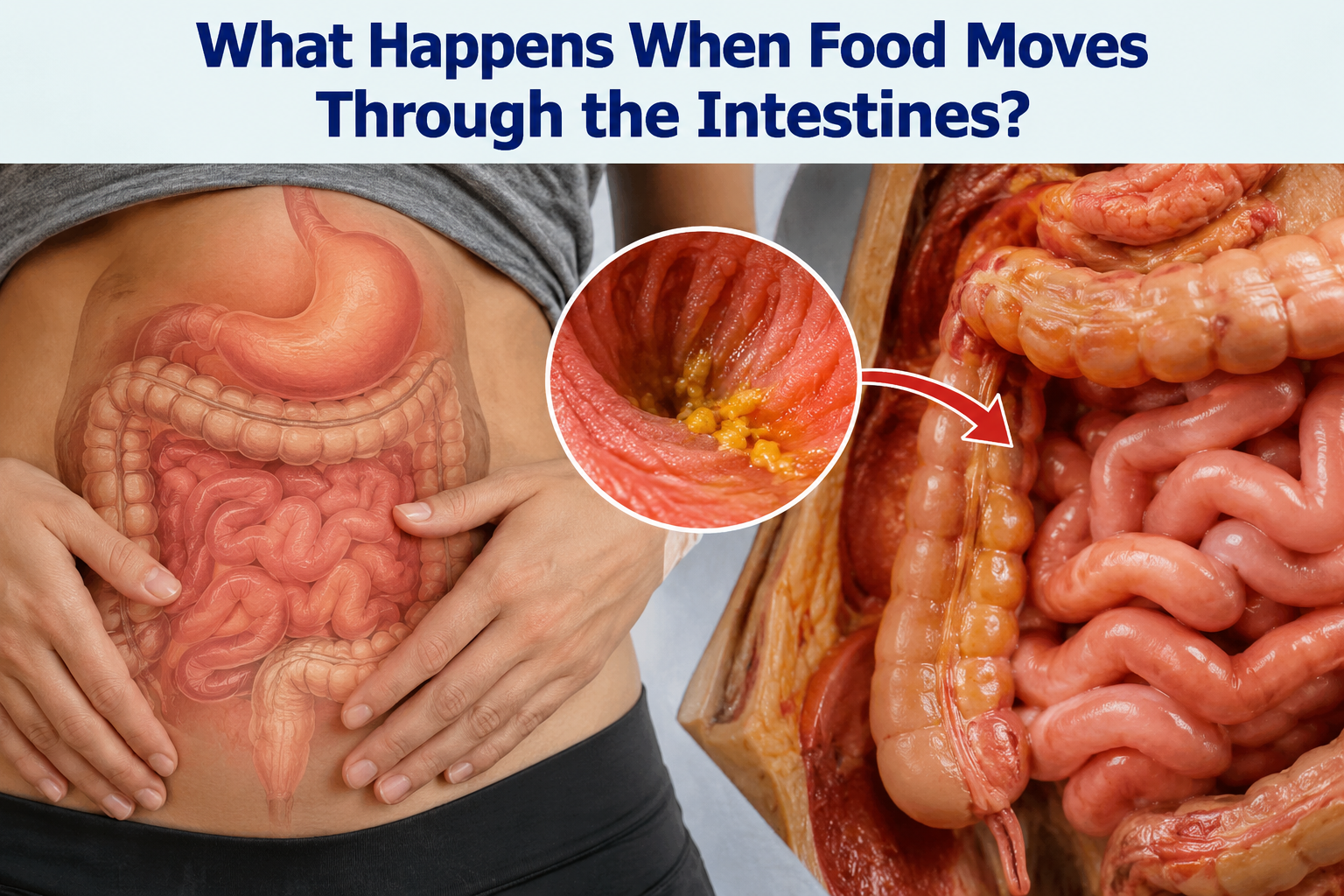
The digestive system works as a connected process.
The mouth prepares food.
The stomach continues breaking it down.
The small intestine handles much of the digestion and nutrient absorption.
The large intestine processes remaining material and absorbs water.
Because the mouth is the beginning of this system, what happens during chewing can influence the preparation of food for every stage that follows.
Proper chewing helps food mix with saliva, reduces particle size, supports comfortable swallowing, and prepares food for digestive enzymes.
It is a small action, but it plays a meaningful role.
Make Proper Chewing a Daily Habit
Developing better chewing habits does not require major changes.
Begin with one meal each day.
Take smaller bites, eat at a comfortable pace, and notice the texture of food before swallowing.
Over time, this can become automatic.
Healthy digestion is usually supported by several habits working together. Eating balanced meals, drinking enough water, consuming enough fiber, staying physically active, managing stress, and getting adequate sleep can all contribute to digestive health.
Chewing properly fits easily into this healthy routine.
Final Thoughts
Chewing food properly supports digestion by starting the digestive process in the mouth. It breaks food into smaller particles, mixes food with saliva, begins the digestion of certain nutrients, and prepares food for the stomach and intestines.
Thorough chewing may also encourage slower eating, support feelings of satisfaction, reduce unnecessary air swallowing, and make meals more enjoyable.
There is no need to count every chew. The most practical approach is to slow down, take smaller bites, and chew until food becomes soft and easy to swallow.
Good digestion often begins with simple habits. Taking a little more time to chew your food is one of the easiest ways to support the natural digestive process every day.