
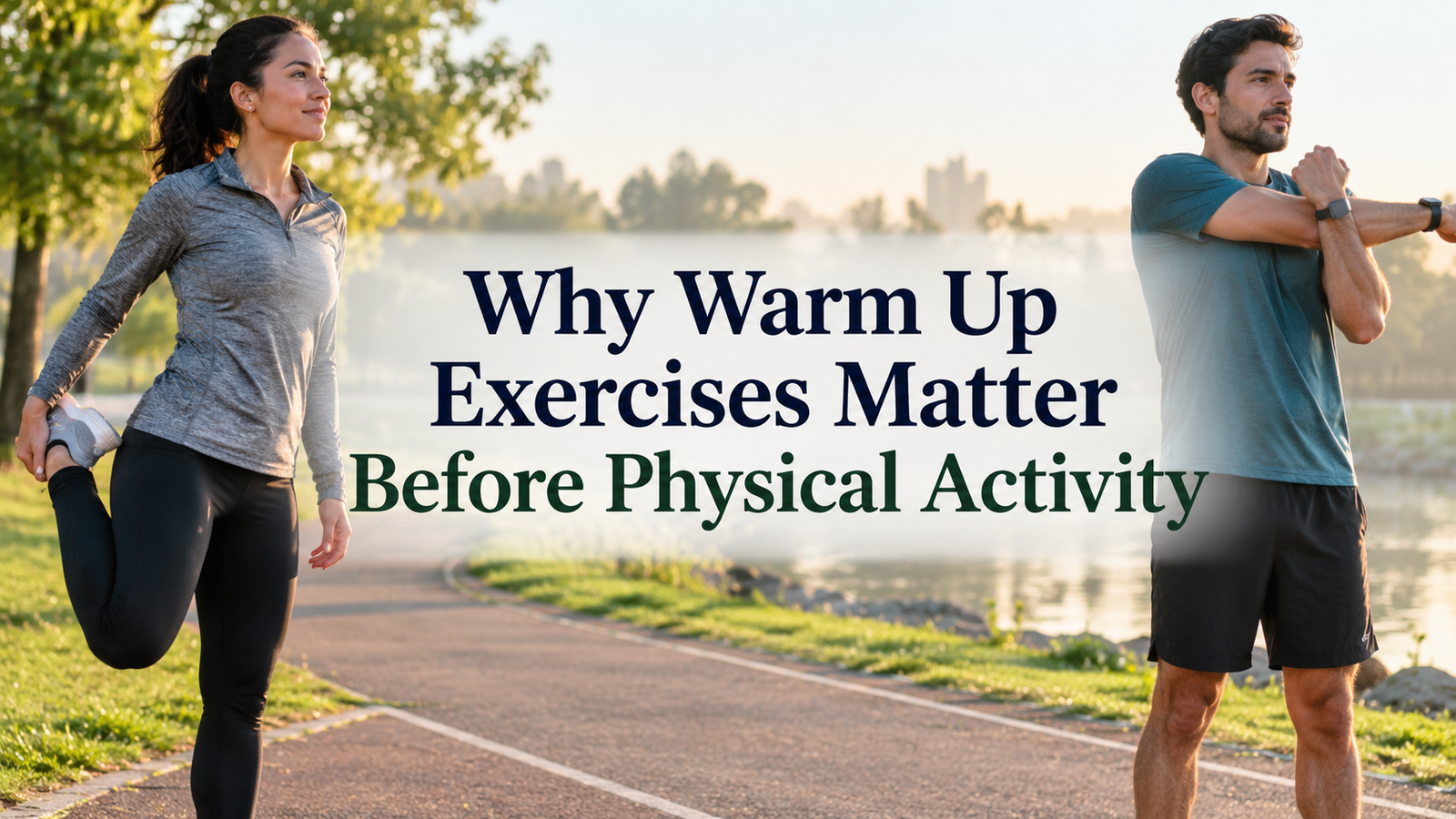
Warm up exercises are an important part of physical activity, yet many people skip them because they want to start their workout immediately. Whether someone is going for a walk, running, lifting weights, playing a sport, or doing a home workout, preparing the body before exercise can make a noticeable difference.
A proper warm up helps the body move from a resting state into an active state gradually. Muscles begin to receive more blood, joints start moving more freely, breathing becomes faster, and the heart prepares for increased physical effort. This preparation may help people exercise more comfortably and perform movements with better control.
Warm up exercises do not need to be complicated or exhausting. In most situations, a few minutes of light movement followed by activity specific exercises can be enough to prepare the body.
Understanding why warm up exercises matter before physical activity can help people develop safer and more effective exercise habits.
What Are Warm Up Exercises?
Warm up exercises are light physical movements performed before the main workout or activity. Their main purpose is to prepare the muscles, joints, heart, lungs, and nervous system for more demanding movement.
A warm up usually starts with gentle movements that slowly increase body temperature and heart rate. This may include walking, slow jogging, arm circles, bodyweight movements, or gentle mobility exercises.
The warm up can then become more specific to the activity that follows. For example, someone preparing to run may perform walking, light jogging, leg movements, and short running drills. A person preparing for strength training may perform bodyweight squats, arm movements, and lighter versions of the exercises they plan to complete.
The key idea is gradual preparation rather than sudden effort.
Warm Up Exercises Increase Blood Flow to Muscles
One of the main benefits of warm up exercises is increased blood flow.
When the body is resting, muscles do not require the same amount of oxygen and nutrients that they need during exercise. Once physical activity begins, the demand increases significantly.
A warm up encourages the heart to pump more blood through the body. As circulation increases, working muscles receive more oxygen and nutrients. This prepares them for movement and physical effort.
Better blood flow may also help muscles feel less stiff. A muscle that has been inactive for several hours may not feel ready for sudden fast movements. Gentle activity allows it to become more prepared before greater force is required.
This is one reason why starting slowly can feel more comfortable than beginning a workout at full intensity.
Warm Ups Help Raise Body Temperature
The term warm up describes exactly what happens inside the body.
As muscles begin moving, they produce heat. Body temperature gradually rises, and the muscles become warmer.
Warm muscles can generally move more efficiently than cold muscles. Increased temperature may improve muscle flexibility and the speed of certain physical reactions within the body.
This does not mean someone needs to become extremely hot or sweaty before exercising. The goal is simply to move the body gradually until it feels more prepared.
A short period of continuous movement can often create this effect.
Warm Up Exercises Prepare the Joints for Movement
Physical activity involves more than muscles. Joints also need to move through different positions.
Warm up exercises can help prepare important joints such as the shoulders, hips, knees, ankles, and wrists.
Gentle joint movement encourages the body to move through comfortable ranges of motion before more demanding activity begins.
For example, someone preparing for lower body exercise may perform hip circles, slow squats, ankle movements, or controlled leg movements. Someone preparing for an upper body workout may use shoulder circles, arm rotations, and gentle pushing movements.
These exercises help the person become familiar with the movements they will perform during the workout.
Joint preparation is especially useful when the activity requires repeated movement, changing direction, lifting weight, or performing movements through a larger range.
Warm Ups Can Improve Movement Quality
Exercise depends on coordination.
The brain sends signals through the nervous system to control muscles and movement. Before intense activity, the nervous system also benefits from preparation.
Warm up exercises give the body an opportunity to practice important movement patterns.
For example, before performing weighted squats, someone might perform slow bodyweight squats. This allows the person to focus on balance, posture, foot position, and movement control before adding resistance.
A basketball player may practice gentle direction changes before playing at full speed. A runner may perform controlled leg movements before increasing pace.
This gradual practice can improve movement awareness.
Better movement quality may help a person feel more confident during the main activity.
Warm Up Exercises Prepare the Heart
The cardiovascular system also needs time to adjust to exercise.
During rest, the heart beats at a relatively low rate. During physical activity, heart rate increases to deliver more oxygen rich blood to the muscles.
If someone suddenly begins very intense activity, the cardiovascular system must adjust quickly.
A gradual warm up allows the heart rate to rise more slowly.
For example, walking before jogging gives the cardiovascular system time to prepare. Light cycling before faster cycling creates a similar effect.
This gradual increase often makes the beginning of exercise feel more comfortable.
It may also help people control their breathing before reaching the more demanding part of the workout.
Warm Ups Prepare the Lungs for Exercise
Breathing changes quickly during physical activity.
Muscles need more oxygen when they are active, so breathing becomes faster and deeper.
During a warm up, the respiratory system begins adapting to the increased demand.
Someone who begins a workout slowly may notice that their breathing gradually becomes stronger without feeling suddenly uncomfortable.
This preparation is particularly useful before activities such as running, cycling, swimming, football, or other forms of cardiovascular exercise.
The goal is not to become exhausted during the warm up. Instead, breathing should increase gradually while remaining comfortable.
Warm Ups May Reduce the Risk of Certain Injuries
People often associate warm up exercises with injury prevention.
A warm up cannot guarantee that an injury will never occur. Sports and physical activity always involve some level of risk.
However, preparing the body before demanding movement may reduce some factors associated with injury.
Warm muscles may move more comfortably. Prepared joints may handle movement more effectively. Practicing the movements before performing them at full speed may improve coordination and control.
This can be especially important during activities involving sprinting, jumping, lifting, sudden direction changes, or powerful movements.
Warm ups should therefore be viewed as one useful part of a broader approach to exercise safety.
Good technique, suitable footwear, gradual training progress, proper recovery, and appropriate exercise intensity are also important.
Warm Ups Can Improve Exercise Performance
Warm up exercises are not only about safety. They may also support performance.
When the muscles, nervous system, heart, and lungs are prepared, the body may respond more effectively during exercise.
An athlete who starts moving gradually may feel faster, stronger, and more coordinated once the main activity begins.
Even recreational exercisers can notice a difference.
For example, the first few minutes of a workout may feel stiff when no warm up is performed. After a proper warm up, movements often feel smoother and more natural.
The benefit can be especially noticeable during activities that require strength, speed, balance, or coordination.
Dynamic Movements Are Useful Before Activity
There are different ways to warm up, but dynamic movements are commonly used before exercise.
Dynamic movements involve controlled movement rather than holding the body in one position for a long period.
Examples include arm circles, walking lunges, gentle squats, leg swings, shoulder rotations, slow jogging, and controlled stepping movements.
These exercises gradually increase body temperature while preparing muscles and joints for movement.
The best warm up usually reflects the activity that follows.
For example, a person preparing to walk may only need a few minutes of slower walking. Someone preparing for a demanding sports session may need a longer and more specific routine.
How Long Should a Warm Up Be?
There is no single warm up duration that is perfect for everyone.
For many everyday activities, around five to ten minutes of gentle preparation may be enough.
A longer warm up may be useful before intense exercise, competitive sports, heavy strength training, or activity in colder conditions.
The warm up should normally begin at a low intensity and increase gradually.
By the end, the person should feel warmer and more ready to move, but not tired.
If the warm up causes significant fatigue, it may be too intense.
The purpose is preparation, not exhaustion.
Simple Warm Up Exercises Before Physical Activity
A basic warm up can include several easy movements.
Start with gentle walking or marching for a few minutes. This helps increase circulation and heart rate.
Next, move the major joints using comfortable movements. Shoulder circles, arm movements, ankle circles, and gentle hip movements can help prepare the body.
After this, perform movements related to the planned activity.
Someone preparing for leg training may perform slow squats and lunges. A runner may perform light jogging and controlled leg movements. Someone preparing for an upper body workout may use arm circles and light resistance exercises.
The entire routine should feel smooth and controlled.
Painful or aggressive movement is not necessary.
Warm Ups Should Match the Activity
One of the most useful principles is specificity.
The warm up should prepare the body for the movements that will occur during the main activity.
A swimmer may focus on shoulder mobility and gentle swimming.
A runner may focus on walking, jogging, and leg movement.
A cyclist may begin with easy cycling before increasing resistance.
A weight training session may begin with bodyweight movements or lighter versions of the planned exercises.
This approach helps the body practice the same general movement patterns before greater effort is required.
Do Not Turn the Warm Up Into a Full Workout
Some people make the mistake of performing a warm up that is too intense.
If someone becomes exhausted before the main workout begins, the warm up may reduce performance rather than improve it.
The goal should be to feel prepared.
Heart rate can increase, body temperature can rise, and muscles can become active, but energy should still remain for the main exercise session.
A good warm up leaves the body feeling ready rather than drained.
Warm Ups Are Helpful for Beginners Too
Warm up exercises are not only for athletes.
Beginners may benefit greatly because they are still learning how different exercises feel.
A gradual warm up allows beginners to practice movement slowly before performing it with greater intensity.
It can also create a transition between daily life and exercise.
Someone who has spent several hours sitting may feel stiff when suddenly beginning a workout. A few minutes of gentle movement can make the transition much easier.
Building the habit of warming up from the beginning can also support better exercise routines in the future.
Make Warm Up Exercises Part of Your Routine
One reason people skip warm ups is because they see them as an optional extra.
It can be more helpful to think of the warm up as the beginning of the workout itself.
Instead of saying, “I will exercise for thirty minutes and then add a warm up,” consider the warm up part of those thirty minutes.
This makes it easier to build a consistent habit.
The routine does not need to be complicated. A few simple movements performed regularly can prepare the body effectively.
Consistency is often more useful than creating an elaborate routine that feels difficult to follow.
Final Thoughts
Warm up exercises matter before physical activity because they help prepare the body for movement in several important ways. They increase blood flow, raise muscle temperature, prepare the joints, activate the nervous system, and allow the heart and lungs to adjust gradually to increased physical effort.
A good warm up may also improve movement quality, support exercise performance, and reduce some factors connected with physical injury.
The most effective warm up is usually simple, gradual, and related to the activity that follows.
You do not need complicated equipment or a long routine. A few minutes of purposeful movement can help the body shift smoothly from rest into activity.
Whether you are walking, running, lifting weights, cycling, playing sports, or exercising at home, making warm up exercises a regular part of your routine can help you approach physical activity with better preparation, control, and confidence.