
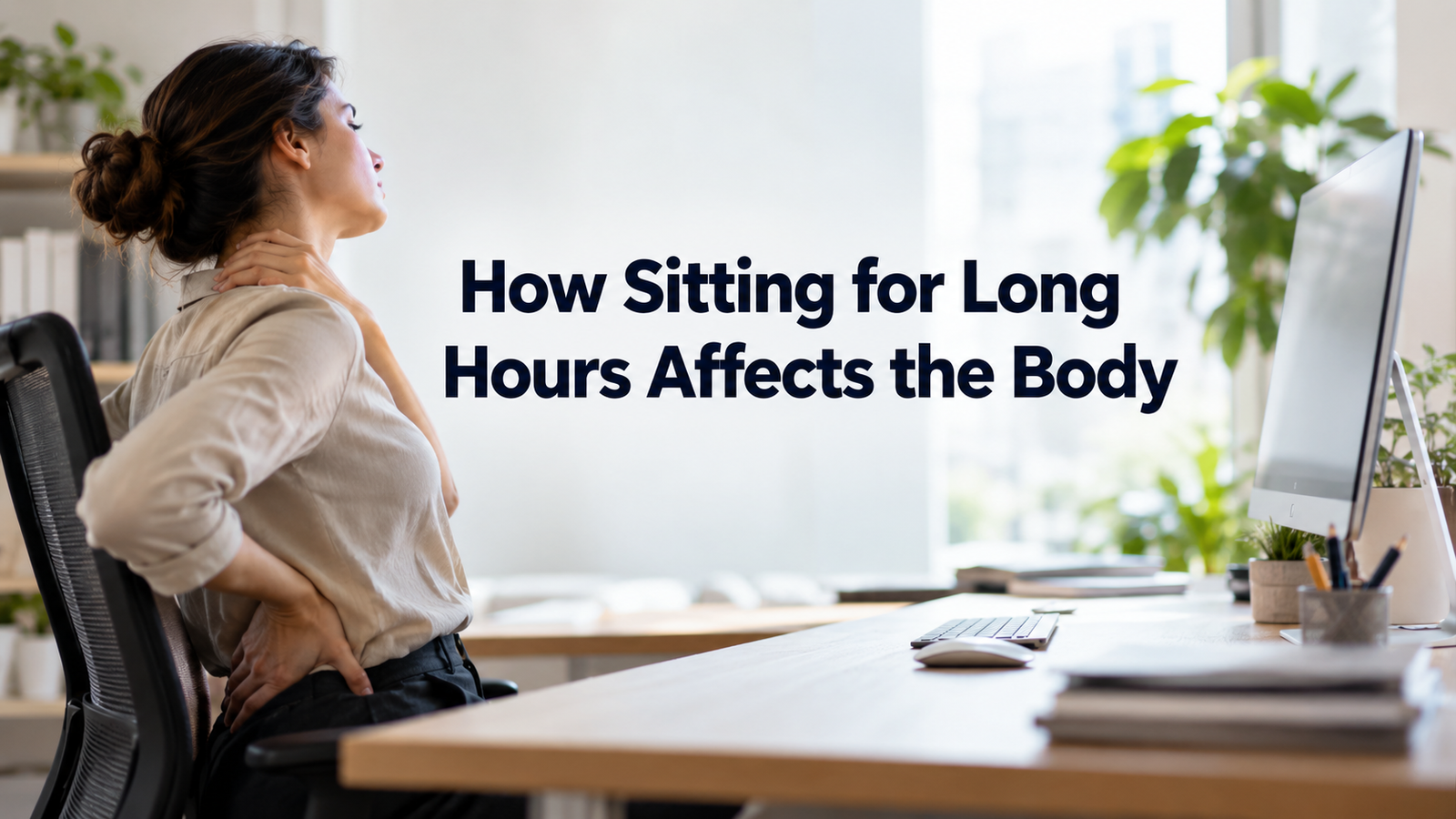
Sitting has become a normal part of modern life. Many people spend several hours every day sitting at a desk, driving a car, watching television, using a computer, or looking at a phone. Sitting itself is not harmful when it is balanced with regular movement. The real problem begins when the body stays in the same seated position for long periods without enough physical activity.
The human body is designed for movement. Muscles, joints, bones, the heart, and even the digestive system work better when the body changes position and remains active throughout the day. When a person sits for many hours continuously, different systems of the body can gradually be affected.
Understanding how sitting for long hours affects the body can help people make better daily choices. Small changes such as standing regularly, walking for a few minutes, stretching, and improving posture can make a meaningful difference.
Why Long Hours of Sitting Can Be a Problem
When we sit, the large muscles of the legs and hips become less active. Energy use also decreases because the body is doing less physical work.
A short period of sitting is completely normal. Problems may develop when sitting continues for several hours every day and becomes the main position of the body.
For example, an office worker may sit during breakfast, travel to work while sitting, spend most of the working day at a desk, travel home in a vehicle, and then spend the evening sitting in front of a television.
In this situation, the total amount of movement during the day may become very low.
Over time, this pattern may influence posture, circulation, muscle strength, energy levels, and overall physical comfort.
Sitting Can Affect Posture
Posture is one of the first things that may change when a person sits for long periods.
Many people begin with a good sitting position but gradually lean forward as they become tired. The shoulders may become rounded and the head may move forward toward the computer screen.
This position increases stress on the muscles of the neck, shoulders, and upper back.
The lower back may also experience pressure, especially when the chair does not provide proper support.
A healthy sitting position usually includes a straight but relaxed back, supported feet, relaxed shoulders, and a screen positioned near eye level.
However, even perfect posture should not be maintained for many hours without movement.
The best posture is often the next posture. Changing position regularly helps prevent certain muscles from becoming overloaded.
Long Sitting Can Cause Neck and Shoulder Discomfort
The neck supports the weight of the head throughout the day.
When the head moves forward while sitting, the neck muscles must work harder to hold it in position. This is common when people look down at laptops or phones for long periods.
As a result, some people experience stiffness around the neck or shoulders after working at a desk.
The upper back may also feel tight because certain muscles remain stretched while others become shortened.
Regular movement can help reduce this problem.
Simple actions such as rolling the shoulders, gently turning the neck, standing up, or walking around the room can give these muscles a chance to relax.
The Lower Back May Feel Stiff
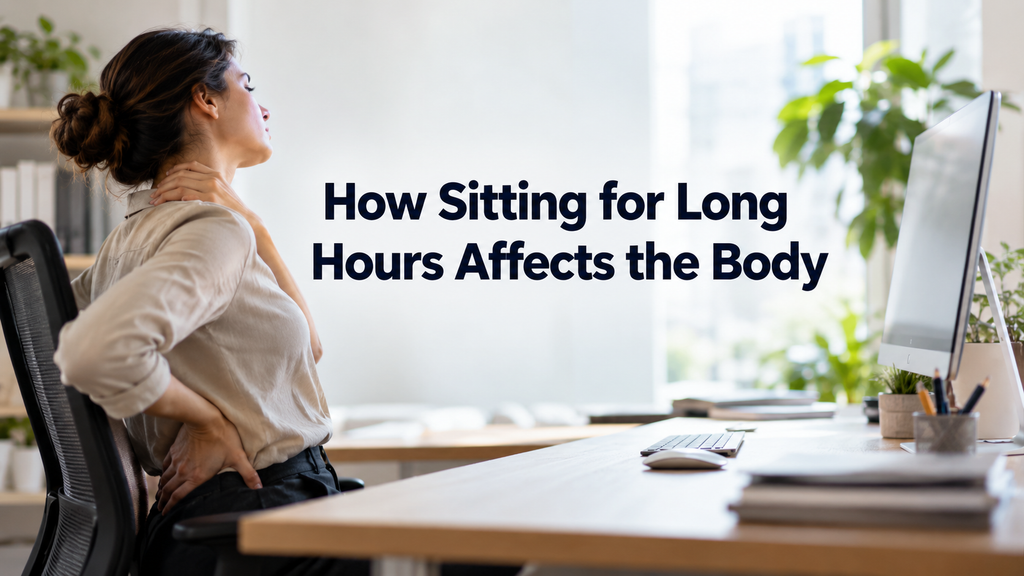
Lower back discomfort is another common issue associated with prolonged sitting.
When sitting for a long time, the muscles that support the spine may become tired. Some people also sit with the pelvis tilted backward, causing the lower back to become rounded.
This can place extra pressure on certain structures around the lower spine.
A supportive chair may improve comfort, but movement remains important.
Standing every so often, walking, and performing gentle stretches can help reduce stiffness.
Strengthening the muscles around the abdomen, hips, and back may also support better posture during daily activities.
Sitting Affects the Hip Muscles
The hips remain bent while sitting.
When this position is maintained for many hours every day, muscles around the front of the hips may gradually become tight.
These muscles are commonly called hip flexors.
Tight hip muscles can sometimes affect the way a person stands or walks. Some people notice stiffness after standing up from a chair after a long working session.
Regular walking and stretching can help maintain flexibility around the hips.
Exercises that strengthen the gluteal muscles can also be useful because these muscles are less active while sitting.
Leg Muscles Become Less Active
The legs contain some of the largest muscles in the body.
Walking, climbing stairs, standing, and other daily movements activate these muscles naturally.
While sitting, their activity decreases significantly.
If a person spends most of the day sitting and does very little exercise, the leg muscles may gradually lose some strength and endurance.
This is one reason regular physical activity is important for people who work at desks.
Even simple activities such as walking to another room, taking the stairs, or standing during a phone call can add useful movement to the day.
Sitting Can Affect Blood Circulation
Movement helps support healthy circulation.
When the leg muscles contract during walking, they help move blood back toward the heart.
During long periods of sitting, these muscles are less active. Some people may notice that their feet or legs feel heavy after sitting for several hours.
Occasional swelling around the ankles can also happen in some people, especially after long journeys or prolonged sitting.
Changing position and walking regularly can encourage circulation.
During long flights, road trips, or desk work, standing and moving whenever possible is a simple way to keep the legs active.
Energy Use Becomes Lower
Sitting requires less energy than standing or walking.
This means the body burns fewer calories during long periods of inactivity.
One hour of sitting is not a major problem. However, when low activity continues for many hours every day, the difference in total daily energy use can become significant.
This is why general movement throughout the day matters in addition to planned exercise.
Someone may exercise for thirty minutes in the morning but still spend the next ten hours sitting.
Both exercise and regular daily movement play important roles in an active lifestyle.
Prolonged Sitting May Influence Metabolism
Metabolism refers to the many chemical processes that allow the body to use nutrients and produce energy.
Muscle activity plays an important role in these processes.
When people move, their muscles use glucose and other sources of energy. During long periods of inactivity, muscle activity decreases.
Research has linked very sedentary lifestyles with several metabolic health concerns.
This does not mean that sitting automatically causes disease. Health is influenced by many factors, including diet, genetics, sleep, stress, physical activity, and overall lifestyle.
Still, reducing unnecessary sitting can be a useful part of a healthier routine.
Sitting Can Affect Daily Energy Levels
It may seem logical that sitting should help the body save energy.
However, many people actually feel more tired after spending several hours sitting.
Long periods of inactivity can create a feeling of sluggishness. The body may feel stiff and the mind may become less alert.
A short walk often helps people feel more refreshed.
Movement increases muscle activity and can help break the feeling of physical and mental fatigue that develops during long desk sessions.
This is one reason short movement breaks during work can be valuable.
Digestion May Feel Slower
Many people remain seated immediately after eating.
Although sitting after a meal is normal, spending nearly the entire day inactive may not support optimal digestive comfort.
Physical movement helps stimulate normal activity throughout the body.
A gentle walk after eating may feel comfortable for some people and can also add more activity to the day.
Heavy meals combined with very little movement may leave some individuals feeling sluggish or uncomfortable.
Balanced meals, adequate water intake, fiber rich foods, and regular movement all contribute to healthy digestion.
Sitting Can Affect Flexibility
Flexibility depends partly on how often muscles and joints move through different positions.
When a person remains seated for most of the day, the hips, knees, and ankles spend long periods in similar positions.
The muscles around these joints may begin to feel tight.
The chest muscles can also become tight if the shoulders remain rounded forward.
Stretching can help maintain mobility, but it should not be the only solution.
The body benefits most when stretching is combined with regular movement throughout the day.
Long Sitting Can Reduce Overall Movement
One of the biggest problems with prolonged sitting is simply that it replaces movement.
There are only a limited number of hours in a day.
If ten or twelve hours are spent sitting, there is less opportunity for walking, carrying, climbing stairs, gardening, household activities, or other forms of physical movement.
These small activities may not feel like exercise, but together they contribute to daily energy use and physical health.
This type of movement is sometimes called everyday physical activity.
It can make a meaningful difference when practiced consistently.
Eyes Can Also Become Tired
Long sitting is often connected with long periods of screen use.
Staring at a computer or phone screen for hours may cause eye fatigue in some people.
The eyes may feel dry, tired, or uncomfortable.
This is partly because people tend to blink less while focusing on a screen.
Taking visual breaks can help.
Looking away from the screen regularly and focusing on something farther away gives the eyes a chance to relax.
Screen position and lighting can also affect comfort.
Sitting May Influence Mood and Focus
Physical activity is connected with both physical and mental wellbeing.
People who spend long periods sitting may sometimes notice reduced concentration, especially after working for several hours without a break.
Standing up, walking briefly, or changing the environment can help refresh attention.
A short movement break can also provide a mental pause from demanding tasks.
This does not require a long workout.
Even a few minutes of walking may help someone return to work feeling more focused.
How Often Should You Move?
There is no single movement schedule that is perfect for everyone.
A practical approach is to avoid remaining in the same seated position for several hours without interruption.
Some people prefer to stand or walk briefly every thirty to sixty minutes.
Others use natural reminders during the day.
For example, they may stand whenever they answer a phone call, refill a water bottle, finish a task, or attend an informal meeting.
The goal is not to avoid sitting completely.
The goal is to create more variety between sitting, standing, and moving.
Simple Ways to Sit Less During the Day
Reducing sitting does not require major changes.
Small habits can gradually increase daily movement.
You can stand while talking on the phone.
Walk around during short breaks.
Use stairs when possible.
Place frequently used items slightly farther away so you need to stand up.
Walk to speak with a coworker instead of sending every message digitally.
Take a short walk after lunch.
Stand while reading short documents.
Stretch your legs during television breaks.
Park slightly farther from an entrance when appropriate.
These small actions may seem insignificant, but repeated every day they can increase total movement considerably.
A Better Desk Setup Can Help
Good workstation design can improve comfort during periods when sitting is necessary.
The chair should support the lower back.
Feet should rest comfortably on the floor or on a foot support.
The computer monitor should be positioned so that the user does not constantly bend the neck downward.
The keyboard and mouse should also be placed where the shoulders can remain relaxed.
However, even the best ergonomic setup cannot replace movement.
A comfortable chair may reduce strain, but it can also make it easier to remain seated for too long.
Movement breaks should still be part of the routine.
Exercise Still Matters
Regular movement during the day is helpful, but structured exercise also has important benefits.
Walking, cycling, swimming, strength training, or other physical activities can help improve muscle strength, endurance, mobility, and cardiovascular fitness.
People with desk jobs should try to combine exercise with frequent daily movement.
Think of them as two parts of the same healthy lifestyle.
Exercise provides a stronger physical challenge, while small movement breaks reduce the amount of uninterrupted sitting.
Build Movement Into Normal Life
The easiest way to become more active is often to connect movement with things you already do.
For example, walk for a few minutes after drinking tea or coffee.
Stand when reading messages.
Walk around the house while speaking on the phone.
Do a few gentle stretches after completing a long computer task.
Take a short evening walk instead of immediately sitting after dinner.
When movement becomes part of normal routines, it feels less like another task that must be completed.
Consistency matters more than making dramatic changes for a few days.
Final Thoughts
Sitting is a normal part of everyday life, but spending long hours sitting without regular movement can affect the body in several ways. It may contribute to poor posture, neck stiffness, lower back discomfort, tight hips, reduced muscle activity, lower energy use, and feelings of tiredness.
The solution is not to eliminate sitting completely. Most people need to sit for work, study, travel, meals, and relaxation.
A healthier approach is to avoid staying in one position for too long.
Standing regularly, walking for a few minutes, stretching, exercising, and improving workstation posture can help the body stay active and comfortable.
The human body works best when movement is part of everyday life. Even small amounts of regular activity can help break long periods of sitting and create a more balanced daily routine.