
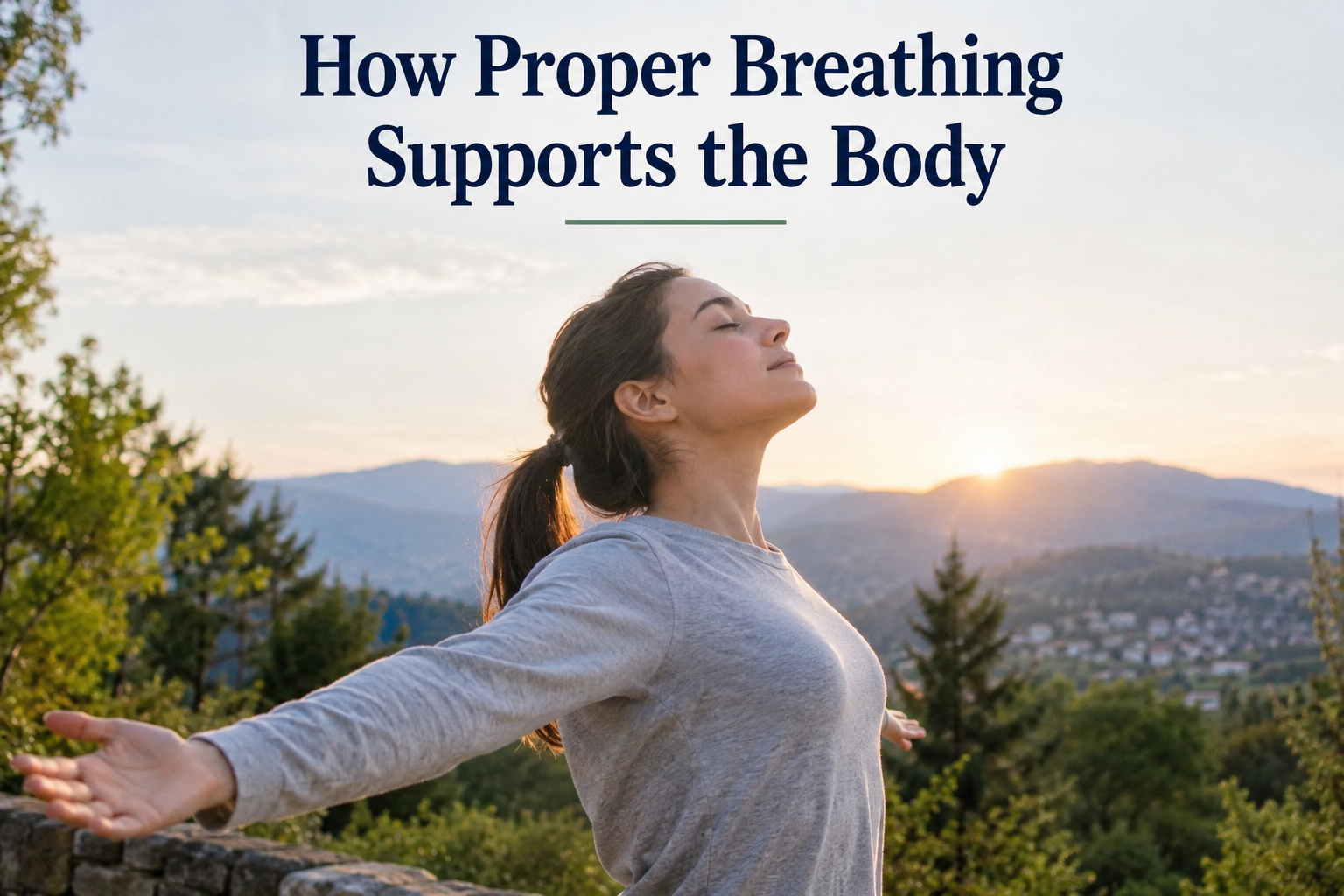
Breathing is one of the most natural functions of the human body. Most people breathe thousands of times every day without thinking about it. Because breathing happens automatically, it is easy to overlook how important it is for overall health. Proper breathing does much more than simply bring air into the lungs. It helps supply oxygen to the body, supports the brain, assists the muscles, influences the nervous system, and helps the body maintain a steady internal balance.
When I started reading more about how the respiratory system works, I realized that breathing is connected with almost every major system in the body. The quality and pattern of breathing can affect energy, concentration, physical movement, stress levels, and even sleep. Learning how proper breathing supports the body can therefore help us understand why simple breathing habits matter so much in daily life.
What Happens When We Breathe
Breathing begins when air enters through the nose or mouth and travels toward the lungs. Inside the lungs are millions of tiny air sacs where oxygen moves into the bloodstream. At the same time, carbon dioxide moves out of the blood so it can be removed from the body during exhalation.
The blood then carries oxygen to tissues and organs throughout the body. Every cell needs oxygen to perform important functions. The brain, muscles, heart, and other organs depend on a regular supply of oxygen to work efficiently.
Proper breathing allows this exchange of oxygen and carbon dioxide to happen smoothly. When breathing becomes too shallow, too rapid, or irregular, the body may not use the breathing process as efficiently.
Proper Breathing Supports Oxygen Supply
One of the main benefits of proper breathing is that it helps provide the body with the oxygen it needs.
Oxygen is involved in the process that allows cells to release energy from food. This energy is used for everything from walking and thinking to digestion and circulation.
When breathing is calm and steady, air has enough time to move properly through the lungs. This supports effective oxygen exchange and helps maintain a healthy balance of gases in the bloodstream.
Good breathing does not mean taking extremely large breaths all day. It means breathing in a natural, relaxed, and controlled way that matches the needs of the body.
Breathing Supports the Brain
The brain is especially dependent on a steady blood and oxygen supply. Although the brain makes up only a small part of total body weight, it requires a significant amount of energy to function properly.
Normal breathing supports the circulation of oxygenated blood to the brain. This helps with concentration, memory, awareness, and clear thinking.
Many people notice that when they are stressed or anxious, their breathing becomes faster and shallower. At the same time, they may find it difficult to concentrate. Slowing the breath and breathing more comfortably can help the body return to a calmer state, which may make it easier to focus.
This is one reason breathing exercises are often used before studying, public speaking, meditation, or other activities that require mental attention.
Proper Breathing Helps the Nervous System
Breathing has a close connection with the nervous system.
The body has systems that prepare us for activity and others that encourage rest and recovery. When a person feels nervous or under pressure, breathing often becomes quick and shallow. This is part of the body’s natural response to stress.
Slow and controlled breathing may encourage the body to move toward a more relaxed state. It can help reduce the feeling of physical tension and create a sense of calm.
This does not mean that breathing can remove every source of stress. However, breathing is one of the few automatic body functions that we can also control voluntarily. This makes it a useful tool for influencing how the body responds during tense situations.
Breathing Supports Healthy Movement
The muscles need oxygen during physical activity. When we walk, climb stairs, exercise, or perform physical work, the muscles require more energy than they do at rest.
As activity increases, breathing usually becomes faster and deeper. This is the body’s way of bringing in more oxygen and removing more carbon dioxide.
Proper breathing during movement may make physical activity feel more comfortable. Many athletes learn to coordinate breathing with their movements because it can help them maintain rhythm and control.
Even during simple activities such as lifting an object or stretching, breathing normally can prevent unnecessary tension. Holding the breath during movement may sometimes make the activity feel harder than it needs to be.
The Role of the Diaphragm
The diaphragm is an important muscle involved in breathing. It is located below the lungs and separates the chest area from the abdomen.
When we inhale, the diaphragm moves downward and gives the lungs more room to expand. When we exhale, it moves upward again.
Healthy breathing often involves good diaphragm movement. This is sometimes called diaphragmatic breathing or belly breathing.
During relaxed diaphragmatic breathing, the abdomen may gently expand during inhalation and move inward during exhalation. This type of breathing can be more efficient than breathing mainly through the upper chest.
People who spend long hours sitting, feel stressed, or develop poor posture may sometimes rely more heavily on upper chest breathing.
Proper Breathing May Help With Relaxation
Many relaxation techniques include slow breathing because breathing patterns can influence physical tension.
A calm breathing rhythm may help relax the shoulders, neck, chest, and abdominal muscles. This can be particularly useful after a stressful day or before bedtime.
One simple method is to breathe slowly through the nose, allow the abdomen to rise naturally, and then breathe out without forcing the air.
The goal is not to take the biggest breath possible. The goal is to create a comfortable and steady breathing pattern.
Regular practice may make it easier to notice when breathing becomes tense during stressful situations.
Breathing and Posture Are Connected
Body posture can affect breathing.
When the body is upright and relaxed, the chest and diaphragm have more space to move naturally. Poor posture, especially sitting in a bent position for long periods, may limit normal chest expansion.
This is common for people who spend many hours using computers or mobile phones.
Improving posture may therefore support easier breathing. Sitting with the head balanced, shoulders relaxed, and chest open can make breathing feel more comfortable.
At the same time, taking a few slow breaths can help a person become more aware of poor posture.
This connection between breathing and posture shows how different parts of the body work together.
Nasal Breathing Has Important Functions
The nose is designed to prepare air before it reaches the lungs.
When air passes through the nose, it becomes warmer and more humid. Tiny hairs and mucus inside the nose also help trap dust and other particles.
For these reasons, nasal breathing is generally useful during normal resting activities.
Breathing through the mouth is sometimes necessary, especially during intense exercise or when the nose is blocked. However, during normal quiet breathing, the nose performs several useful functions that support the respiratory system.
Keeping the nasal passages comfortable and staying hydrated may help support natural nasal breathing.
Proper Breathing Can Support Exercise Performance
During exercise, breathing plays an important role in supplying oxygen and removing carbon dioxide.
People sometimes hold their breath during difficult movements without realizing it. This can create extra tension and make exercise feel uncomfortable.
Learning to breathe rhythmically may make physical activity feel more controlled.
For example, during walking or jogging, some people naturally develop a breathing rhythm that matches their steps. During strength exercises, breathing is often coordinated with the lifting and lowering phases of movement.
The exact breathing pattern may depend on the type of activity, but the main idea is to avoid unnecessary breath holding.
Breathing Supports the Removal of Carbon Dioxide
Breathing is not only about taking in oxygen. It is also essential for removing carbon dioxide.
Carbon dioxide is produced when cells use energy. The blood transports it to the lungs, where it leaves the body through exhalation.
The body carefully regulates carbon dioxide levels because they are involved in maintaining the chemical balance of the blood.
Very rapid breathing can remove carbon dioxide too quickly, which may lead to uncomfortable sensations such as lightheadedness or tingling. This is why calm and controlled breathing is generally more comfortable when a person is resting.
Breathing Can Influence Sleep
Breathing patterns also matter during sleep.
A relaxed breathing pattern may help the body settle before bedtime. Many people find that slow breathing reduces mental activity and physical tension.
Creating a calm routine before sleep may include reducing screen use, lowering room light, relaxing the body, and breathing slowly.
However, loud snoring, repeated pauses in breathing, or frequent waking should not simply be treated with breathing exercises. These may require medical evaluation.
Healthy breathing habits can support relaxation, but they are not a replacement for professional care when breathing problems occur.
Proper Breathing May Reduce Unnecessary Muscle Tension
Stressful breathing often involves the muscles of the neck and shoulders.
When a person breathes mainly into the upper chest, these muscles may work harder than necessary. Over time, this can contribute to feelings of tightness or fatigue.
Diaphragmatic breathing allows the main breathing muscles to perform more of the work.
Relaxing the shoulders while breathing slowly may help reduce unnecessary tension in the upper body.
This can be especially helpful for people who spend long periods sitting at a desk.
Breathing Awareness Can Improve Daily Habits
One useful habit is simply becoming aware of breathing.
You can occasionally notice whether your breathing is fast, shallow, comfortable, or relaxed. This can be done while working, driving, reading, exercising, or preparing for sleep.
Breathing awareness does not need to become complicated.
A few calm breaths can act as a reminder to relax the shoulders, improve posture, and reduce unnecessary tension.
Over time, this awareness may make proper breathing feel more natural.
Simple Ways to Support Healthy Breathing
There are several practical habits that can support comfortable breathing.
Maintaining good posture can give the lungs and diaphragm more room to move.
Regular physical activity can support respiratory fitness and improve the efficiency of the heart and lungs.
Staying hydrated helps keep the tissues of the nose and airways comfortable.
Avoiding smoking and polluted environments when possible can help protect the respiratory system.
Taking short movement breaks during long periods of sitting can also support posture and breathing.
Relaxation techniques that include slow breathing may be useful during stressful situations.
The key is consistency rather than forcing the breath.
When Breathing Problems Should Be Taken Seriously
Breathing should normally feel natural and comfortable at rest.
Persistent shortness of breath, chest pain, wheezing, unusual breathing difficulty, blue lips, severe dizziness, or sudden breathing problems should not be ignored.
A healthcare professional can determine whether symptoms are related to the lungs, heart, allergies, infection, anxiety, or another cause.
Breathing exercises can support general wellness, but they should not be used as a substitute for proper medical evaluation when serious symptoms are present.
Final Thoughts
Proper breathing supports the body in many important ways. It helps supply oxygen, remove carbon dioxide, support brain function, assist physical movement, and influence the nervous system.
Healthy breathing also works closely with posture, exercise, relaxation, and sleep.
Most of the time, good breathing does not require complicated techniques. A comfortable posture, relaxed shoulders, natural nasal breathing, and steady diaphragm movement can all help the body breathe more efficiently.
The more I learn about breathing, the more interesting it becomes. Something that appears so simple is actually connected with nearly every part of human health. Paying attention to breathing may seem like a small habit, but it can help us better understand and support the body’s natural functions.