
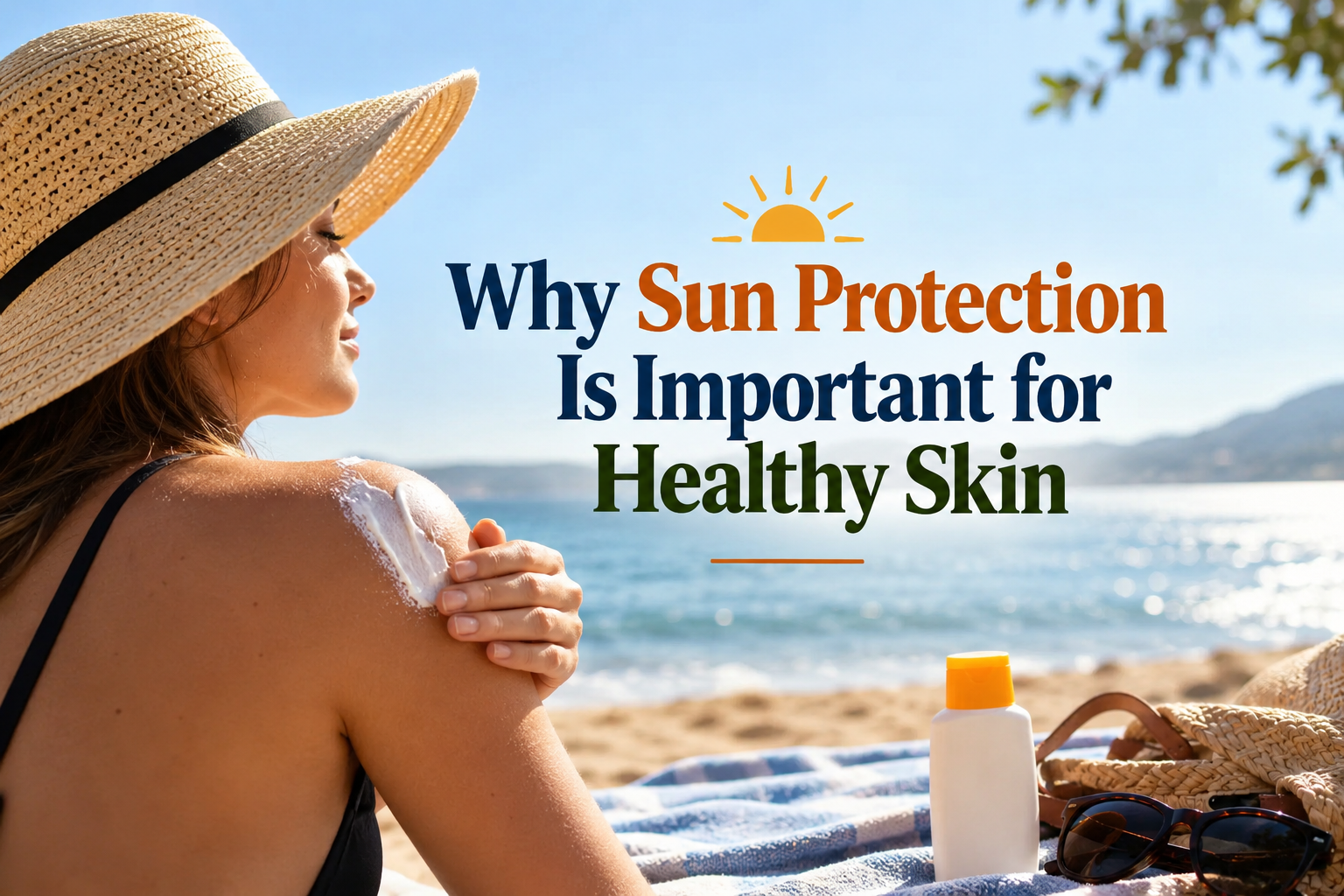
Healthy skin is not only about using creams, cleansers, or moisturizers. One of the most important habits for maintaining healthy skin is protecting it from excessive sunlight. Sunlight is essential for life and helps the body perform certain important functions, but too much exposure to ultraviolet radiation can gradually damage the skin.
Sun protection is important for healthy skin because ultraviolet rays can affect skin cells, increase dryness, contribute to premature aging, create uneven pigmentation, and raise the risk of serious skin problems. These effects may develop slowly, which is why many people do not notice the damage immediately.
Learning how sunlight affects the skin can help us build better daily habits. Simple practices such as using sunscreen, wearing protective clothing, seeking shade, and avoiding unnecessary exposure during strong sunlight can support healthier skin for many years.
Understanding Sunlight and the Skin
Sunlight contains different forms of energy. The ultraviolet rays that reach the skin are commonly divided into UVA and UVB rays.
UVA rays can penetrate deeper layers of the skin. They are strongly associated with premature skin aging, changes in skin texture, and the development of wrinkles.
UVB rays mainly affect the outer layers of the skin. They are one of the major causes of sunburn and also play an important role in skin damage.
Both forms of ultraviolet radiation can affect skin health. This means that sun protection is useful even on days when the weather does not feel extremely hot.
Ultraviolet radiation and heat are not the same thing. A cool or cloudy day can still expose the skin to ultraviolet rays.
Why Sun Protection Is Important for Healthy Skin
The skin acts as a natural barrier between the body and the outside environment. It protects internal tissues from microbes, chemicals, physical injury, and environmental changes.
Regular exposure to strong sunlight can weaken the appearance and function of the skin over time.
Ultraviolet radiation can damage important structures inside skin cells. When this damage happens repeatedly, the skin may begin to show visible signs such as roughness, fine lines, dark spots, and changes in elasticity.
Protecting the skin from excessive sunlight helps reduce unnecessary stress on skin cells and allows the skin to maintain a healthier appearance.
Sun Exposure Can Cause Sunburn
Sunburn is one of the most obvious signs of excessive ultraviolet exposure.
The skin may become red, warm, painful, or sensitive after spending too much time in strong sunlight. In more severe cases, swelling or blisters may appear.
Sunburn happens because ultraviolet radiation damages skin cells and triggers an inflammatory response.
Although the redness may disappear after several days, the underlying cellular damage should not be ignored.
Repeated sunburn, especially during childhood and adolescence, can contribute to long term skin risks later in life.
Preventing sunburn is therefore an important part of maintaining healthy skin.
Sunlight Can Speed Up Skin Aging
Natural aging affects everyone, but excessive sun exposure can make signs of aging appear earlier.
This process is often called photoaging.
Ultraviolet radiation can damage collagen and elastin, which are important proteins that help keep the skin firm, smooth, and flexible.
When these proteins become damaged, the skin may gradually lose some of its elasticity.
Common signs of sun related skin aging can include wrinkles, fine lines, rough texture, dryness, and sagging.
Sun protection cannot stop natural aging, but it can help reduce unnecessary environmental damage that may make aging more noticeable.
Sun Protection Helps Prevent Dark Spots
Uneven skin tone is another common effect of frequent sun exposure.
The body produces melanin to help protect the skin from ultraviolet radiation. Melanin is the pigment that gives skin its natural color.
When certain areas of skin produce extra melanin after sun exposure, darker patches or spots can appear.
These may include freckles, sun spots, or areas of uneven pigmentation.
People who already have pigmentation concerns may notice that strong sunlight makes them more visible.
Regular sun protection can help reduce additional pigmentation and support a more even looking skin tone.
Sunscreen Is an Important Part of Daily Skin Care
Sunscreen is one of the most useful tools for protecting exposed skin from ultraviolet radiation.
A good sunscreen helps reduce the amount of UV radiation reaching the skin.
Broad spectrum sunscreen provides protection against both UVA and UVB rays.
For everyday use, many health organizations recommend sunscreen with an SPF of at least 30.
SPF stands for sun protection factor. It mainly describes the level of protection against UVB radiation.
However, SPF should not be the only thing you look for. Choosing a product labeled broad spectrum is also important because it indicates protection against UVA radiation.
Sunscreen should be applied to areas of exposed skin, including the face, neck, ears, arms, and hands.
Applying Sunscreen Correctly Matters
Using sunscreen is helpful, but applying it correctly is equally important.
People sometimes apply only a very small amount of sunscreen, which may provide less protection than expected.
Sunscreen should be applied generously and evenly to exposed areas.
It is usually helpful to apply it before going outdoors so that the product has time to settle on the skin.
Reapplication is also important, especially when spending several hours outside.
Swimming, sweating, and wiping the skin with a towel can reduce the effectiveness of sunscreen.
For outdoor activities, following the instructions on the sunscreen label can help maintain better protection.
Protective Clothing Can Reduce Sun Exposure
Sunscreen is not the only form of sun protection.
Clothing can provide an additional physical barrier between the skin and sunlight.
Long sleeved shirts, trousers, and other clothing that covers more skin can be useful during extended outdoor activities.
The amount of protection provided by clothing depends on factors such as fabric thickness, weave, color, and condition.
Some clothing is specifically designed with ultraviolet protection ratings.
Even ordinary clothing, however, can help reduce direct sunlight reaching the skin.
Using clothing together with sunscreen provides more complete protection than relying on sunscreen alone.
Hats Can Protect the Face and Neck
The face, scalp, ears, and neck receive significant sun exposure because they are often uncovered.
A wide brimmed hat can help provide shade to these areas.
This can be particularly useful when walking, gardening, working outside, traveling, or spending time at the beach.
Baseball style caps can protect part of the face but may leave the ears and neck exposed.
A wider hat generally provides better coverage.
Hats are simple, reusable, and easy to include in everyday sun protection habits.
Shade Can Reduce Direct Sun Exposure
Seeking shade is another practical way to protect the skin.
Trees, umbrellas, covered walkways, and buildings can reduce direct exposure to sunlight.
Shade is especially helpful during periods when the sun is strongest.
However, shade does not always block ultraviolet radiation completely. Rays can reflect from surfaces such as water, sand, concrete, and light colored surroundings.
For this reason, combining shade with sunscreen and protective clothing usually provides better protection.
The Sun Can Affect Skin Even on Cloudy Days
Many people associate sun protection only with bright summer days.
However, ultraviolet rays can still pass through clouds.
This means the skin may receive significant UV exposure even when the sky looks cloudy.
The temperature can also be misleading.
A cool day does not necessarily mean ultraviolet radiation is weak.
This is one reason why daily sun protection can be beneficial for people who spend time outdoors regularly.
Sun Exposure Can Occur Through Windows
UVA rays can pass through some types of glass.
People who spend long periods near sunny windows may still receive some ultraviolet exposure.
This can affect people who drive frequently, work near large windows, or sit beside windows for several hours each day.
The level of exposure depends on the type of glass and the environment.
People who receive strong sunlight through windows may benefit from using sunscreen or adjusting their environment with curtains, shades, or ultraviolet protective window treatments.
Children Also Need Sun Protection
Children often spend considerable time outdoors.
Their skin should also be protected from excessive ultraviolet exposure.
Protective clothing, shade, hats, and age appropriate sunscreen can help reduce sun damage.
Parents and caregivers can also teach children healthy sun habits from an early age.
Simple habits learned during childhood may continue into adulthood.
Since ultraviolet damage can accumulate over many years, early protection can contribute to better long term skin health.
People With All Skin Tones Need Protection
People with darker skin naturally have more melanin, which provides some protection against ultraviolet radiation.
However, darker skin can still experience sun damage.
Sunburn, pigmentation changes, premature aging, and serious skin conditions can occur in people of every skin tone.
The signs may appear differently depending on skin color, but protection remains important.
Sun protection should therefore be viewed as a universal skin health habit rather than something needed only by people with fair skin.
Sun Protection Can Support Healthy Skin Texture
Excessive sunlight can gradually make skin feel dry, rough, or uneven.
Ultraviolet exposure can affect the skin barrier and the structures that help maintain smoothness.
Protecting the skin from excessive sun exposure allows moisturizers and other skin care products to work in a healthier environment.
People who invest in skin care products but regularly expose their skin to strong sunlight without protection may not receive the full benefit of their routine.
Sun protection therefore works well as a foundation for overall skin care.
Moisturizer and Sunscreen Work Differently
Moisturizer helps support the skin barrier and reduce water loss.
Sunscreen helps protect the skin from ultraviolet radiation.
Both can be valuable, but they perform different jobs.
Some products combine moisturizer and sunscreen, which can make daily routines easier.
However, people should check the label to make sure the product provides adequate broad spectrum sun protection.
Using the right combination of hydration and UV protection can help maintain comfortable, healthy looking skin.
Sun Protection Is Important During Outdoor Exercise
Walking, running, cycling, swimming, gardening, and outdoor sports can increase sun exposure.
People may stay outside for longer periods during these activities without realizing how much ultraviolet radiation they are receiving.
Sweating can also reduce the amount of sunscreen remaining on the skin.
Water resistant sunscreen can be useful during swimming or heavy exercise.
Protective clothing, sunglasses, hats, and shaded rest areas can provide additional protection.
Planning outdoor exercise during periods of lower sun intensity may also help reduce exposure.
Diet Cannot Replace Sun Protection
Healthy foods can support normal skin function.
Fruits, vegetables, proteins, healthy fats, vitamins, minerals, and enough water all contribute to general health.
However, a nutritious diet cannot replace physical sun protection.
No food can provide the same protection as sunscreen, clothing, and shade.
Nutrition and sun safety should be viewed as complementary habits.
A healthy lifestyle supports the skin from inside the body, while sun protection reduces harmful environmental exposure from outside.
Check Your Skin Regularly
Paying attention to changes in the skin is another useful health habit.
People can occasionally examine their skin for new spots, changing moles, unusual patches, or areas that do not heal normally.
Many skin changes are harmless, but unusual or persistent changes should be discussed with a qualified healthcare professional or dermatologist.
Early medical evaluation can be important when a suspicious skin change appears.
Regular self awareness should not create unnecessary fear. It is simply a practical way to become familiar with what is normal for your own skin.
Build Sun Protection Into Your Daily Routine
Sun protection becomes easier when it is treated as a normal daily habit.
Keep sunscreen near other products that you use each morning.
Store a hat in your car or bag if you spend time outdoors.
Choose shaded areas when possible.
Wear clothing that provides comfortable coverage during long periods outside.
These small decisions can become automatic over time.
Consistency is more useful than using sun protection occasionally only after the skin has already become irritated.
Sun Protection Is a Long Term Investment in Skin Health
The effects of ultraviolet exposure accumulate over time.
A single day outside may not create noticeable changes, but repeated exposure over months and years can gradually affect the skin.
This is why sun protection should be considered a long term health habit.
People often focus on appearance when discussing sunscreen, but the benefits go beyond cosmetic concerns.
Protecting the skin helps reduce sunburn, premature aging, pigmentation problems, and more serious forms of ultraviolet damage.
Final Thoughts
Sun protection is important for healthy skin because ultraviolet radiation can affect skin cells, collagen, pigmentation, moisture balance, and overall skin appearance.
Simple habits can make a meaningful difference.
Using broad spectrum sunscreen, wearing protective clothing, seeking shade, using hats, and limiting unnecessary exposure during strong sunlight can all help protect the skin.
Healthy skin care does not need to be complicated. Cleansing gently, moisturizing when needed, eating a balanced diet, drinking enough water, and protecting the skin from excessive sunlight can create a strong foundation for long term skin health.
The most effective approach is consistency. Sun protection should not be limited to holidays, beaches, or extremely hot days. Making it part of everyday life can help the skin remain healthier, smoother, and better protected as the years pass.