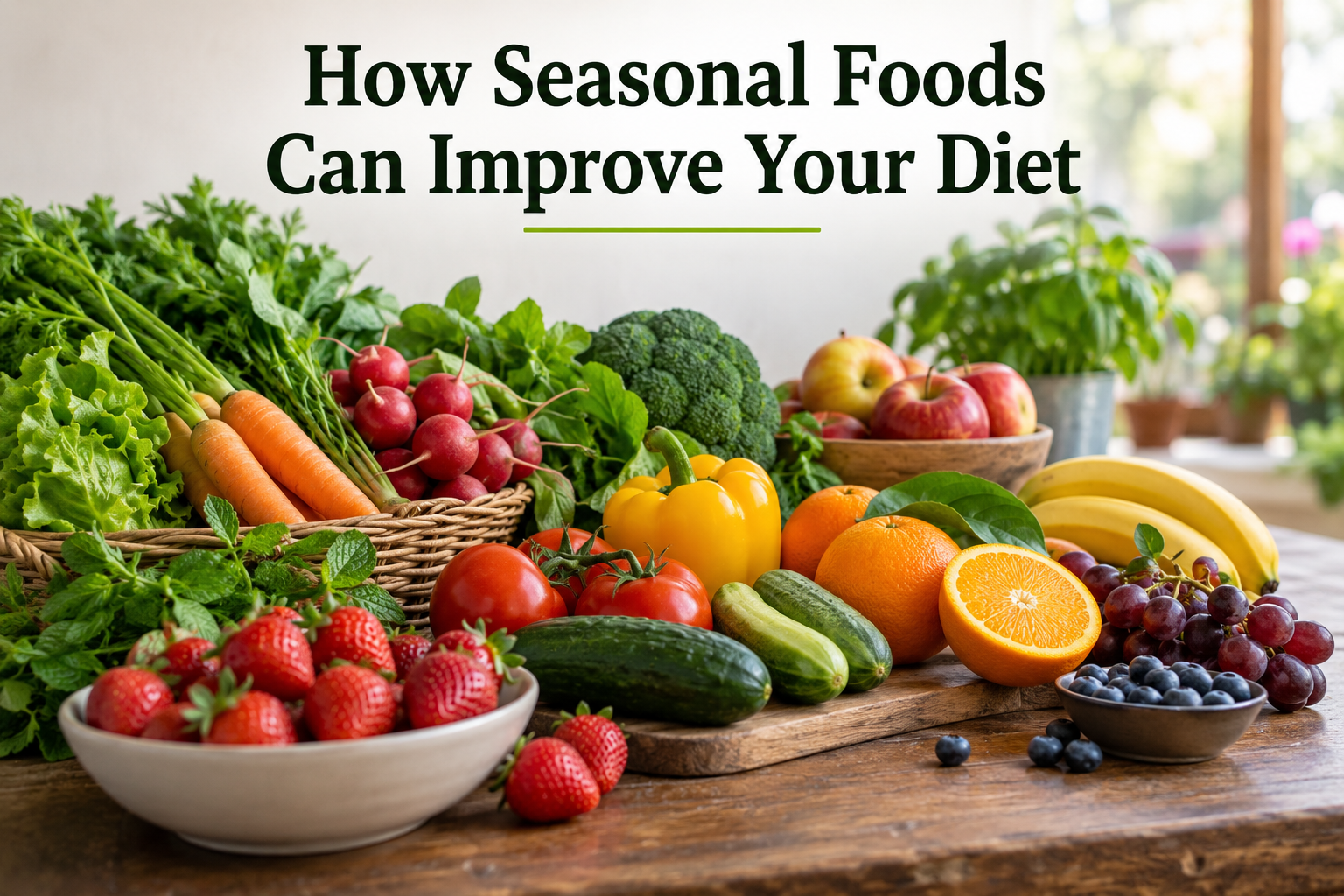
Eating well does not always require complicated meal plans or expensive foods. One of the simplest ways to improve daily nutrition is to choose foods that are naturally available in the current season. Seasonal foods are fruits, vegetables, herbs, and other fresh foods that grow and become available during a particular time of the year.
When foods are eaten in their natural season, they are often fresher, more flavorful, and easier to include in everyday meals. Seasonal eating can also encourage variety, because the foods available in summer are different from those found in winter, spring, or autumn.
I have found that understanding seasonal foods makes healthy eating feel more practical. Instead of depending on the same foods throughout the year, a person can use what is naturally abundant at a particular time. This simple habit can support better nutrition, make meals more interesting, and help create a more balanced diet.
What Are Seasonal Foods?
Seasonal foods are foods that are harvested during the time of year when they naturally grow best. Different plants require different temperatures, sunlight, rainfall, and growing conditions.
For example, some fruits thrive in warm summer weather, while certain vegetables grow better during cooler months. When these foods reach the market during their natural growing season, they are usually closer to their ideal stage of freshness.
The exact season of a food may vary depending on climate and location. A fruit that is harvested in one month in one country may become available at another time elsewhere.
The main idea is simple. Seasonal eating means choosing foods that are naturally fresh and widely available in your local area at that time of year.
Seasonal Foods Can Add More Variety to Your Diet
One of the biggest benefits of seasonal eating is variety.
Many people fall into the habit of eating the same vegetables and fruits every week. Although familiar foods can still be nutritious, eating a wider range of foods can provide a greater variety of vitamins, minerals, antioxidants, fiber, and plant compounds.
Seasonal changes naturally encourage variety.
In warmer months, meals may include foods such as cucumbers, tomatoes, melons, peaches, mangoes, berries, and leafy greens. Cooler months may bring oranges, carrots, cauliflower, cabbage, turnips, peas, and other vegetables.
When the season changes, the food choices also change.
This prevents meals from becoming repetitive and introduces different nutrients into the diet throughout the year.
Seasonal Foods Are Often Fresher
Freshness is one of the main reasons people enjoy seasonal produce.
Fruits and vegetables that are grown during their natural season may reach local markets soon after harvest. Shorter storage and transportation times can help preserve their texture, taste, and overall quality.
A freshly harvested tomato, peach, strawberry, or cucumber often tastes noticeably different from one that has been transported over a long distance or stored for an extended period.
Fresh foods can also make healthy eating more enjoyable.
If vegetables taste crisp and fruits taste naturally sweet, people may be more willing to include them in their meals and snacks.
This is important because a healthy diet is easier to maintain when nutritious foods are enjoyable rather than something that feels like an obligation.
Seasonal Eating Can Support Better Nutrient Variety
Different foods provide different nutrients.
Citrus fruits are known for vitamin C. Leafy vegetables provide folate and several important minerals. Orange vegetables such as carrots and pumpkin contain carotenoids. Beans and peas provide fiber, plant protein, and several vitamins and minerals.
Eating seasonally makes it easier to rotate these foods throughout the year.
Instead of focusing on one so called superfood, seasonal eating encourages a broader approach to nutrition.
No single fruit or vegetable can provide everything the body needs. Good nutrition comes from combining many different foods over time.
This is why dietary variety is so important.
Seasonal Fruits Can Replace Highly Processed Snacks
Fresh seasonal fruit can be a practical alternative to highly processed snacks.
When fruits are naturally abundant, they are often easy to find and enjoyable to eat. A ripe apple, orange, mango, peach, melon slice, or handful of berries can provide natural sweetness along with fiber, vitamins, minerals, and water.
This can be more nutritious than regularly choosing snacks that contain large amounts of added sugar, refined flour, or unhealthy fats.
Fruit does contain natural sugars, but it also contains nutrients and fiber that are not usually present in sweets, candies, and sugary drinks.
Keeping seasonal fruit at home can make healthy snacking easier.
Wash it, keep it visible, and choose it when you feel hungry between meals.
Seasonal Vegetables Can Improve Everyday Meals
Vegetables are one of the most important parts of a balanced diet, yet many people do not eat enough of them.
Seasonal vegetables can make it easier to add more vegetables to daily meals because they can be used in many simple ways.
Fresh tomatoes can be added to salads and curries. Spinach can be cooked with lentils or eggs. Carrots can be eaten raw or added to soups. Cauliflower can be roasted, steamed, or cooked with spices. Cucumbers can be served with yogurt or salads.
The goal does not have to be a complicated recipe.
Even adding one extra seasonal vegetable to lunch or dinner can gradually improve the overall quality of the diet.
Seasonal Foods May Be More Affordable
Price is an important part of healthy eating.
Fresh foods can sometimes seem expensive, especially when certain fruits or vegetables are not widely available. However, foods that are in season are often produced in larger quantities.
When supply increases, prices may become more reasonable.
For example, a fruit that is expensive before its main season may become much more affordable when local markets are full of it.
This can make seasonal eating useful for families who want to improve their diet without greatly increasing food expenses.
A good habit is to look at what is abundant in the local market instead of buying the same produce every week regardless of price.
Seasonal Eating Can Encourage Home Cooking
Fresh seasonal ingredients often encourage people to prepare meals at home.
When you bring home fresh vegetables, fruits, herbs, and other ingredients, you are more likely to think about how to use them in soups, salads, curries, grilled dishes, smoothies, or simple snacks.
Home cooking gives you more control over ingredients.
You can control the amount of salt, sugar, and oil used in a meal. You can also increase vegetables, reduce unnecessary sauces, and choose more balanced portions.
This does not mean every meal must be prepared from scratch.
Even simple home cooked meals can support better nutrition when they include fresh seasonal ingredients.
Seasonal Foods Can Make Meals More Enjoyable
Taste matters.
People are more likely to continue healthy eating habits when food is satisfying and enjoyable.
Seasonal produce is often harvested closer to the time when it has naturally developed its flavor. This can make fruits sweeter, vegetables more flavorful, and herbs more aromatic.
Think about the difference between a ripe summer mango and a fruit that was harvested too early and stored for a long period.
Better flavor can make healthy foods easier to enjoy without excessive sugar, salt, or heavy sauces.
When ingredients taste good naturally, simple cooking methods often work very well.
Seasonal Foods Can Support Hydration
Some seasonal foods contain a large amount of water.
During hot weather, foods such as watermelon, cucumber, tomatoes, peaches, oranges, and other juicy fruits can contribute to overall fluid intake.
Water should still be the main source of hydration, but water rich foods can support daily hydration.
They may also make meals feel lighter and more refreshing during warm weather.
During cooler seasons, soups made with seasonal vegetables can provide both fluids and valuable nutrients.
This shows how seasonal foods can naturally fit the body’s changing needs and eating habits throughout the year.
Seasonal Eating Can Increase Fiber Intake
Fiber is important for digestive health, regular bowel movements, and overall well being.
Fruits, vegetables, legumes, and whole plant foods are some of the best natural sources of fiber.
Seasonal eating often encourages greater consumption of these foods.
For example, adding apples, pears, carrots, peas, leafy vegetables, beans, and other seasonal plant foods can gradually increase fiber intake.
However, it is often better to increase fiber slowly, especially if your usual diet contains very little fiber. Drinking enough water is also important.
A varied diet containing seasonal plant foods can make it easier to meet daily fiber needs.
Seasonal Foods Can Support Healthy Weight Management
Seasonal fruits and vegetables can be useful for people who want to maintain a healthy body weight.
Many of these foods contain relatively few calories while providing water, fiber, vitamins, and minerals.
Foods rich in water and fiber can help meals feel more filling.
For example, adding a vegetable salad to lunch or eating fresh fruit instead of a sugary dessert may help reduce unnecessary calorie intake without making meals feel too restrictive.
Weight management still depends on overall eating habits, portions, activity level, sleep, and other factors.
However, seasonal foods can become a useful part of a balanced eating routine.
Seasonal Eating Makes Healthy Eating Less Complicated
Healthy eating often becomes confusing because people hear about new diets, supplements, and food trends every day.
Seasonal eating offers a simpler approach.
Visit a local market, notice which fresh foods are widely available, and build meals around some of them.
You do not need to follow every nutrition trend.
A meal containing whole grains, vegetables, a healthy protein source, and some healthy fat can already provide a strong nutritional foundation.
Seasonal produce can simply make that meal more varied and enjoyable.
How to Start Eating More Seasonal Foods
You do not need to change your entire diet at once.
Start by observing your local market or grocery store.
Notice which fruits and vegetables are available in large quantities and at reasonable prices. These are often good signs that a food is currently in season.
Choose two or three seasonal foods each week.
Try adding them to meals you already enjoy.
For example, seasonal fruit can be added to breakfast. Fresh vegetables can be included in lunch or dinner. Herbs can improve the flavor of soups, salads, and cooked dishes.
Keeping the process simple makes it easier to continue.
Plan Meals Around What Is Available
Meal planning becomes easier when you start with available ingredients instead of deciding on a recipe first.
Suppose spinach, carrots, peas, and oranges are widely available. You could prepare eggs with spinach for breakfast, rice with vegetables for lunch, and an orange as an afternoon snack.
On another day, tomatoes, cucumbers, and melons may be abundant. These can easily become part of salads, sandwiches, yogurt dishes, or snacks.
This flexible approach helps reduce food waste and makes meal planning more practical.
Combine Seasonal Foods With Other Healthy Foods
Seasonal eating does not mean that every food you eat must be seasonal.
Foods such as rice, oats, lentils, beans, eggs, yogurt, nuts, seeds, fish, chicken, and whole grain products can still be part of your regular diet.
Seasonal fruits and vegetables can be added around these basic foods.
For example, oatmeal can be topped with seasonal fruit. Lentils can be cooked with seasonal vegetables. Yogurt can be served with fresh fruit. Chicken can be paired with a large vegetable salad.
This creates balanced meals without making seasonal eating unnecessarily strict.
Frozen and Stored Foods Can Still Be Useful
Fresh seasonal produce is excellent, but frozen foods can also be nutritious.
Some fruits and vegetables are frozen soon after harvesting, which can help preserve nutrients.
Frozen peas, berries, spinach, and mixed vegetables can be useful when fresh options are unavailable.
Similarly, properly stored foods such as dried beans, lentils, nuts, seeds, and whole grains can provide valuable nutrition throughout the year.
The goal is not perfection.
The goal is to use seasonal foods whenever practical while maintaining an overall balanced diet.
Buy Only What You Can Use
Fresh produce can spoil quickly, especially during warm weather.
Buying too much may lead to unnecessary food waste.
It is better to purchase realistic quantities that your household can use within several days.
Meal planning can help.
If you buy tomatoes, think about using them in salads, eggs, sandwiches, sauces, or cooked meals. If you buy fruit, keep some easily accessible for snacks.
Using seasonal foods efficiently can save money and reduce waste.
Wash and Store Seasonal Produce Properly
Proper handling helps maintain the quality of fresh foods.
Some fruits and vegetables should be refrigerated, while others are better stored at room temperature until ripe.
Leafy vegetables usually remain fresher when refrigerated properly. Potatoes and onions generally need a cool, dry, dark place. Certain fruits may ripen better outside the refrigerator before being chilled.
Learning basic food storage techniques can help seasonal foods last longer.
Always wash fresh produce properly before eating or preparing it.
Seasonal Eating Does Not Need Strict Rules
One common mistake is turning healthy eating into a rigid system.
You do not have to avoid every food that is out of season.
Modern food systems allow many foods to be available throughout the year, and there is nothing wrong with using them.
Seasonal eating should be viewed as a helpful strategy rather than a strict rule.
Choose seasonal foods more often when they are fresh, affordable, and easily available.
At the same time, continue eating other nutritious foods that fit your needs, budget, and preferences.
A Simple Seasonal Meal Example
A balanced seasonal breakfast might include oatmeal with fresh fruit and a few nuts.
Lunch could include whole grain bread or rice, lentils, seasonal vegetables, yogurt, and salad.
An afternoon snack might be a piece of seasonal fruit.
Dinner could include chicken, fish, beans, or another protein source with cooked vegetables and a whole grain.
This type of meal pattern is simple, flexible, and nutritious.
The exact foods can change with the season.
That variety is one of the main strengths of seasonal eating.
Final Thoughts
Seasonal foods can improve your diet by encouraging freshness, variety, better flavor, and greater consumption of fruits and vegetables. They can also make healthy eating more affordable and practical when locally grown foods are widely available.
The main benefit of seasonal eating is not that seasonal foods are magically healthier than every other food. The real advantage is that they can make a nutritious diet easier to enjoy and maintain.
When you regularly explore what is fresh and available in your area, you naturally introduce different colors, flavors, textures, and nutrients into your meals.
Healthy eating does not need to be complicated.
Start with fresh foods that are available around you, combine them with whole grains, healthy proteins, legumes, nuts, seeds, and other nutritious foods, and aim for variety over time.
Small choices made throughout the year can gradually build a more balanced and enjoyable diet.