
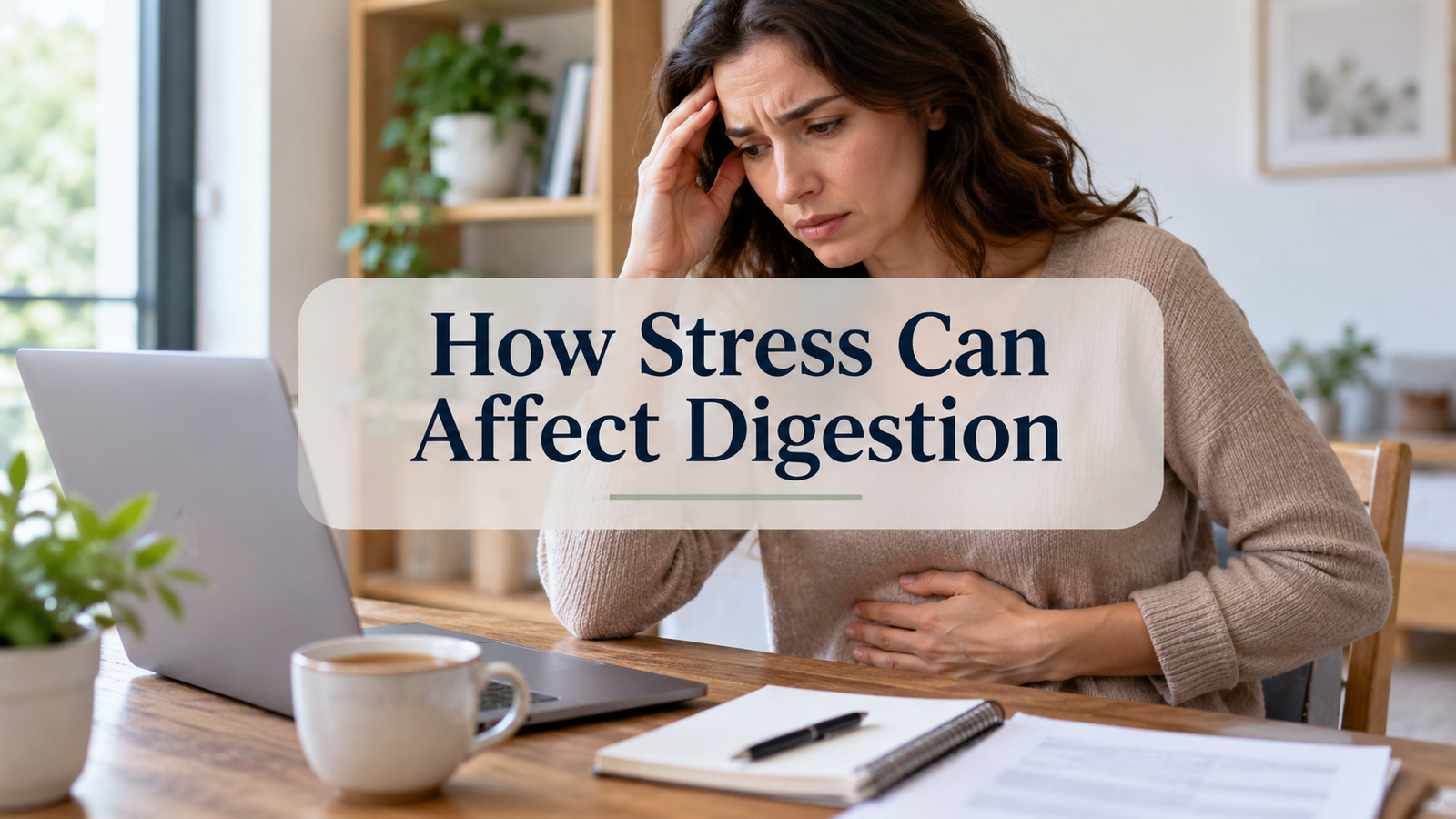
Stress is a natural part of life. Everyone experiences it at some point, whether it comes from work, studies, family responsibilities, financial pressure, lack of sleep, or unexpected problems. A small amount of stress can sometimes help us stay alert and focused. However, when stress continues for a long time, it can begin to affect different parts of the body, including the digestive system.
Many people notice that their stomach feels different when they are worried or nervous. Some may lose their appetite, while others may feel hungry more often. Stress can also be linked with stomach discomfort, bloating, changes in bowel habits, nausea, or indigestion.
This happens because the brain and digestive system are closely connected. Understanding this connection can make it easier to see why emotional pressure sometimes causes physical digestive symptoms.
The Connection Between the Brain and the Digestive System
The digestive system does much more than simply break down food. It communicates constantly with the brain through nerves, hormones, and chemical signals.
This communication system is often called the gut brain connection.
The brain can influence how quickly food moves through the digestive tract, how much digestive fluid is produced, and how sensitive the stomach and intestines feel. At the same time, the digestive system sends signals back to the brain about hunger, fullness, discomfort, and other sensations.
Because this connection works in both directions, emotional stress can sometimes change the way digestion works.
For example, before an important meeting or examination, some people may suddenly feel the need to use the bathroom. Others may experience butterflies in the stomach or temporary nausea. These are everyday examples of how closely the brain and digestive system are connected.
What Happens in the Body During Stress?
When the body senses stress, it activates a natural response designed to deal with danger or pressure.
Stress hormones such as adrenaline and cortisol are released. Heart rate may increase, breathing may become faster, and more energy is directed toward the muscles and brain.
During this response, digestion may become less of a priority.
Blood flow and energy can be redirected away from the digestive system because the body is preparing to deal with the stressful situation. This temporary change is usually not a problem when stress lasts only a short time.
However, when stress becomes frequent or long lasting, repeated changes in digestive activity may contribute to uncomfortable symptoms.
Stress Can Change the Speed of Digestion
One of the most noticeable ways stress affects digestion is by changing how quickly food moves through the digestive tract.
For some people, stress may speed up intestinal movement. This can lead to loose stools or more frequent bowel movements.
For others, stress may slow down digestion. Slower movement through the intestines can contribute to constipation, fullness, or abdominal discomfort.
This is one reason people can respond to stress very differently.
Two people facing the same stressful situation may have completely different digestive symptoms. One person may develop diarrhea, while another may become constipated.
Stress and Stomach Discomfort
Stress can make the stomach feel more sensitive.
A person may notice pain, heaviness, burning, nausea, or discomfort even when there is no serious digestive problem.
The stomach and intestines contain many nerves. When the nervous system becomes more active during stress, these nerves may also become more sensitive.
As a result, normal digestive activity may feel uncomfortable.
For example, a small amount of gas that would normally go unnoticed may feel much stronger during a stressful period.
This increased sensitivity can make people more aware of every movement, sound, or sensation in the digestive system.
Stress and Bloating
Bloating is another digestive complaint that some people experience during stressful periods.
There are several possible reasons for this.
Stress can change intestinal movement and may influence how gas moves through the digestive tract. It may also cause people to swallow more air, especially if they are breathing quickly, chewing gum, eating quickly, or talking while eating.
Stress may also affect food choices.
When people feel overwhelmed, they may eat more processed foods, sugary snacks, fried foods, or large meals. These foods can sometimes contribute to bloating, especially when eaten quickly or in large amounts.
The combination of emotional stress and changed eating habits can make bloating more noticeable.
Stress Can Affect Appetite
Stress can influence appetite in different ways.
Some people lose interest in food when they feel nervous or worried. Short term stress can reduce hunger because the body is focused on dealing with the immediate situation.
Other people experience the opposite effect.
Long lasting stress may increase cravings for foods that are high in sugar, fat, or calories. This may partly happen because stress hormones can influence hunger signals and food preferences.
Emotional eating can also become a habit.
Someone may begin using snacks or comfort foods as a way to relax after a stressful day. Occasional comfort eating is common, but frequent overeating may lead to digestive discomfort, weight gain, or poor nutrition over time.
Stress and Indigestion
Indigestion can include symptoms such as upper abdominal discomfort, fullness after eating, burping, nausea, or a burning feeling.
Stress does not always directly cause indigestion, but it can make symptoms worse in some people.
When someone is stressed, they may eat too quickly, skip meals, drink more caffeine, sleep poorly, or eat large meals late at night.
These habits can place additional pressure on the digestive system.
Stress can also increase awareness of stomach sensations, making mild discomfort feel stronger than usual.
Stress May Affect Acid Reflux Symptoms
Acid reflux happens when stomach contents move upward into the esophagus.
Common symptoms include heartburn, a sour taste in the mouth, or discomfort after meals.
Stress is not usually considered the main cause of acid reflux, but it may make symptoms more noticeable.
During stressful periods, people may drink more coffee, eat larger meals, consume spicy or fatty foods, smoke, or lie down soon after eating. These behaviors can increase the chance of reflux symptoms.
Stress may also make the esophagus more sensitive, meaning that a person may feel discomfort more strongly.
Stress and Bowel Habits
The intestines respond strongly to signals from the nervous system.
This is why stress can sometimes cause sudden changes in bowel habits.
Some people may experience urgent bowel movements before an important event. Others may notice that constipation becomes worse during periods of emotional pressure.
Changes in bowel habits can also be influenced by other stress related behaviors, such as reduced physical activity, poor hydration, irregular meal times, or less fiber intake.
When daily routines change, digestion can change as well.
Stress and Irritable Bowel Symptoms
People with irritable bowel syndrome often report that stress can make their symptoms more noticeable.
Irritable bowel syndrome is commonly associated with abdominal pain, bloating, constipation, diarrhea, or a combination of these symptoms.
The condition is closely related to the communication between the brain and intestines.
Stress may increase intestinal sensitivity or change bowel movement patterns in people who are already sensitive to digestive changes.
This does not mean that digestive symptoms are imagined or purely emotional. The digestive system is physically responding to signals from the nervous system.
Stress May Influence Gut Bacteria
The human digestive system contains trillions of microorganisms, commonly known as the gut microbiome.
These microorganisms help with digestion, vitamin production, immune function, and many other processes.
Research continues to explore how stress may influence the balance of bacteria in the digestive system.
Stress related hormones, changes in diet, sleep problems, and changes in intestinal activity may all affect the gut environment.
At the same time, gut bacteria may influence communication between the digestive system and the brain.
This area of research is complex, but it shows how closely emotional health and digestive health may be connected.
Eating Quickly During Stress Can Make Digestion Harder
People often eat differently when they are busy or stressed.
Meals may be rushed, skipped, or eaten while working.
Eating too quickly can lead to poor chewing and increased air swallowing. It can also make it harder to notice when the stomach is becoming full.
Slow, careful eating gives the digestive system time to respond naturally.
Chewing food thoroughly also helps begin the digestive process before food reaches the stomach.
Creating a calmer eating environment may help reduce unnecessary digestive discomfort.
Poor Sleep Can Add to the Problem
Stress and poor sleep often happen together.
A person who is worried may find it difficult to fall asleep or may wake frequently during the night.
Lack of sleep can affect appetite hormones, food cravings, energy levels, and daily routines.
When people are tired, they may rely on caffeine or convenience foods. They may also exercise less and eat meals at irregular times.
All of these changes can indirectly affect digestion.
Improving sleep habits can therefore support both emotional balance and digestive health.
How to Support Digestion During Stressful Periods
Managing stress does not mean eliminating every stressful situation. That is usually impossible.
The goal is to develop healthy habits that help the body respond more calmly.
Regular meals are a good starting point. Skipping meals and then eating a very large meal later can increase digestive discomfort.
Eating slowly can also help.
Try to chew food properly and avoid rushing through meals whenever possible.
Drinking enough water supports normal bowel function, especially if constipation is a problem.
Regular physical activity can also be helpful. Walking, stretching, swimming, cycling, or other moderate exercise can support both digestion and stress management.
Relaxation techniques may also reduce tension.
Slow breathing, meditation, prayer, reading, spending time outdoors, or simply taking a quiet break can help calm the nervous system.
Choose Foods That Support Digestive Health
A balanced diet supports normal digestion during both calm and stressful periods.
Whole grains, vegetables, fruits, beans, nuts, seeds, yogurt, eggs, fish, and other nutritious foods can provide important nutrients.
Fiber is especially helpful for regular bowel movements.
However, increasing fiber too quickly may cause gas or bloating in some people. It is usually better to increase fiber gradually while drinking enough water.
Very large meals, excessive fried foods, sugary snacks, and highly processed foods may cause discomfort in some individuals.
There is no single perfect diet for everyone, so it is helpful to observe how different foods affect your own body.
Reduce Excess Caffeine
Coffee and tea are commonly used to stay alert during stressful days.
Moderate amounts may be suitable for many people, but excessive caffeine can increase nervousness, disturb sleep, and sometimes worsen digestive symptoms.
Caffeine may also stimulate the intestines in some people, leading to more frequent bowel movements.
If digestive symptoms seem worse after several cups of coffee or strong tea, reducing intake may help.
Maintain a Regular Routine
The digestive system often responds well to consistency.
Eating at similar times, sleeping on a regular schedule, staying physically active, and drinking enough water can support normal digestive function.
Stress often disrupts routine.
People may work late, skip breakfast, eat dinner very late, or spend long periods sitting.
Returning to a simple daily routine can sometimes improve both digestion and general wellbeing.
When Digestive Symptoms Should Be Checked
Stress can affect digestion, but persistent symptoms should not automatically be blamed on stress.
Digestive problems can have many possible causes.
Medical advice may be needed if symptoms are severe, frequent, or unusual.
Warning signs can include unexplained weight loss, blood in the stool, repeated vomiting, severe abdominal pain, difficulty swallowing, black stools, persistent diarrhea, ongoing constipation, or symptoms that regularly disturb sleep.
A healthcare professional can help determine whether stress is contributing to the symptoms or whether another condition needs attention.
Final Thoughts
Stress and digestion are strongly connected because the brain and digestive system constantly communicate with each other.
During stressful situations, the body releases hormones and changes the way energy is used. These changes can influence appetite, stomach sensitivity, bowel movements, bloating, indigestion, and other digestive functions.
Short periods of stress are usually manageable, but long lasting stress can make digestive symptoms more noticeable, especially when it also affects sleep, eating habits, physical activity, and daily routines.
Supporting digestive health during stressful times often comes down to simple habits. Eat regular balanced meals, chew food slowly, drink enough water, stay physically active, sleep well, and find healthy ways to relax.
Paying attention to both emotional wellbeing and digestive habits can make a meaningful difference. The digestive system works best when the body is nourished, rested, hydrated, and given enough time to recover from everyday pressure.